








Next Article
The Best Energy Supplements, According to Science
9 minutes
Feeling overwhelmed and stressed? Explore the science behind the best GABA supplement for stress and how this calming neurotransmitter works. Learn about precision dosing, the gut-brain axis, and how the right formula can support both restorative sleep and sustained focus without the jitters.
You know that feeling when your brain won’t stop running through tomorrow’s to-do list at 11 PM? Or when you’re sitting at your desk, technically working, but your mind keeps circling back to that email you need to send, the meeting you’re dreading, and the fifteen other things competing for your attention? Your body’s “go” signal seems stuck on repeat, and your “calm down” button has gone missing.
When you’re looking for a way to gently tap the brakes on your nervous system, you might come across GABA supplements. But here’s the thing—not all GABA supplements are created equal. 💊
The best GABA supplement for stress is one that’s formulated with a deep understanding of your biology, particularly the powerful connection between your gut and your brain. It’s less about flooding your system with the highest possible dose and more about precision, delivery, and synergy. Here’s your guide to understanding the science of GABA and what to look for.
Think of your brain as a city with traffic flowing constantly. Some signals, like the neurotransmitter glutamate, act as the green lights—telling neurons to “go, go, go.” GABA (gamma-aminobutyric acid), on the other hand, is the primary inhibitory neurotransmitter. It’s the red light.
GABA’s main job is to reduce neuronal excitability throughout the nervous system. When GABA binds to its receptors in the brain, it produces a calming effect by slowing down nerve signals.1
This natural braking mechanism helps you:
When your GABA levels are balanced, your brain can effectively shift gears from a state of high alert to one of rest and relaxation. When they’re not? You might feel like you’re running on a hamster wheel that won’t slow down.
So, how do you choose the best GABA supplement for stress? It comes down to looking beyond the main ingredient and considering the entire formulation. Here’s what matters.
More isn’t always better. Look for a dose that’s evidence-based. Health Canada recognizes doses as low as 50 mg as effective for promoting relaxation. Safety reviews have found that doses up to 120 mg per day for 12 weeks are well-tolerated.2
Also, consider the form. A fermented, microbially-derived GABA is designed to work as a postbiotic with your gut ecosystem—more on that in a moment.
When ingredients are “synergistic,” it means that the compounds work better together than they would alone. Think of it like a band—each instrument sounds fine solo, but when they play together, they create something more powerful. Similarly, GABA rarely works in isolation in your body.
Look for formulas that pair it with other science-backed ingredients that complement its calming effects. For sleep support, that might mean adaptogens like ashwagandha. For focus, it could be nootropics like ginseng.
A sophisticated delivery system can protect ingredients and ensure they get where they need to go.
Med-Lock’s proprietary ViaCap® technology, for example, uses a capsule-in-capsule design to deliver certain ingredients to the small intestine and others, like GABA, further down to the colon—the heart of your gut microbiome.
This is the big question, and the science is nuanced. For years, the effectiveness of oral GABA supplements has been a topic of debate, largely due to one major biological hurdle.
Your brain has a highly selective security system called the blood-brain barrier (BBB). 🧠 Think of it like a bouncer at an exclusive club—it decides what gets in and what stays out. Its job is to let essential nutrients through while keeping potentially harmful substances away from your brain.
Historically, scientists believed that GABA molecules from supplements were too large to get past this bouncer. This led some to question how GABA supplements could work at all.1
But a growing body of research suggests that GABA can still have a calming effect on the body, possibly through other pathways. (Not exactly a dead end after all.)
Several human studies have found that GABA supplementation can help reduce markers of stress. One study found that taking 100 mg of GABA helped decrease measures of psychological stress in participants facing a challenging mental task.3
Another small study showed that even a dose of 28 mg of GABA in chocolate helped reduce the stress response.4,5
👉 TL;DR: GABA supplementation shows promise for reducing stress markers in human studies, even though scientists originally thought it couldn’t cross the blood-brain barrier. The gut-brain axis may be the key pathway.
These findings suggest GABA might influence the nervous system through pathways outside of direct brain entry. One of the most well-studied of these? The gut-brain axis.
Instead of just trying to get through the brain’s front door, what if GABA could send a message through a different channel? That’s the idea behind focusing on the gut-brain axis.
Your gut and brain are in constant communication through a network of nerves, hormones, and immune signals. This gut-brain axis is a two-way street. A stressed mind can affect your gut, and an imbalanced gut can affect your mood.
Many of the beneficial microbes living in your gut can naturally produce neurotransmitters, including GABA.6 This microbial GABA can interact with the enteric nervous system (the nervous system of your gut), sending calming signals up to the brain.
Some of the most innovative approaches use GABA that’s made the same way your body makes it—through fermentation by beneficial microbes. This is what scientists call a “bioidentical” form, meaning it’s identical in structure to the GABA your body produces naturally.
When delivered to the gut, this type of GABA acts as a postbiotic. A postbiotic is a preparation of inanimate microorganisms and/or their components that confers a health benefit on the host.7 It’s like sending a ready-made, beneficial compound directly to your gut to support the conversation along the gut-brain axis.
Dr. Dirk Gevers, Ph.D., Chief Scientific Officer at Med-Lock Health, explains this approach. “Many people focus on whether GABA supplements can cross the blood-brain barrier. But we’re interested in its role within the gut-brain axis. Introducing it as a postbiotic in the gut allows interaction with local signaling pathways that help regulate the body’s stress response. It’s a distinct route of support rooted in biology rather than bypassing it. “
This approach bypasses the BBB debate by working with the gut-brain communication network—offering a new way to support calm and relaxation.
Because of its primary role in promoting relaxation, GABA is a versatile ingredient that can be used in different formulations to achieve distinct goals. From winding down for the night to staying focused during a busy day, it’s all about the supporting cast.
Stress and sleep are deeply connected. If you can’t quiet your mind, it’s hard to fall asleep. GABA’s ability to promote relaxation is a key reason it’s included in sleep-focused formulas.8
Research suggests that taking GABA before bed can help people fall asleep faster.9
Its relaxation-promoting properties are combined with:
Together, these ingredients create a synergistic effect—helping you not just fall asleep, but also achieve deeper, more restorative rest.
It might sound counterintuitive, but relaxation is also essential for effective focus. The jitters and scattered thoughts that often come with stress (or too much coffee) can derail productivity. GABA can help by tempering excess excitatory signals, creating a state of calm focus rather than anxious energy.
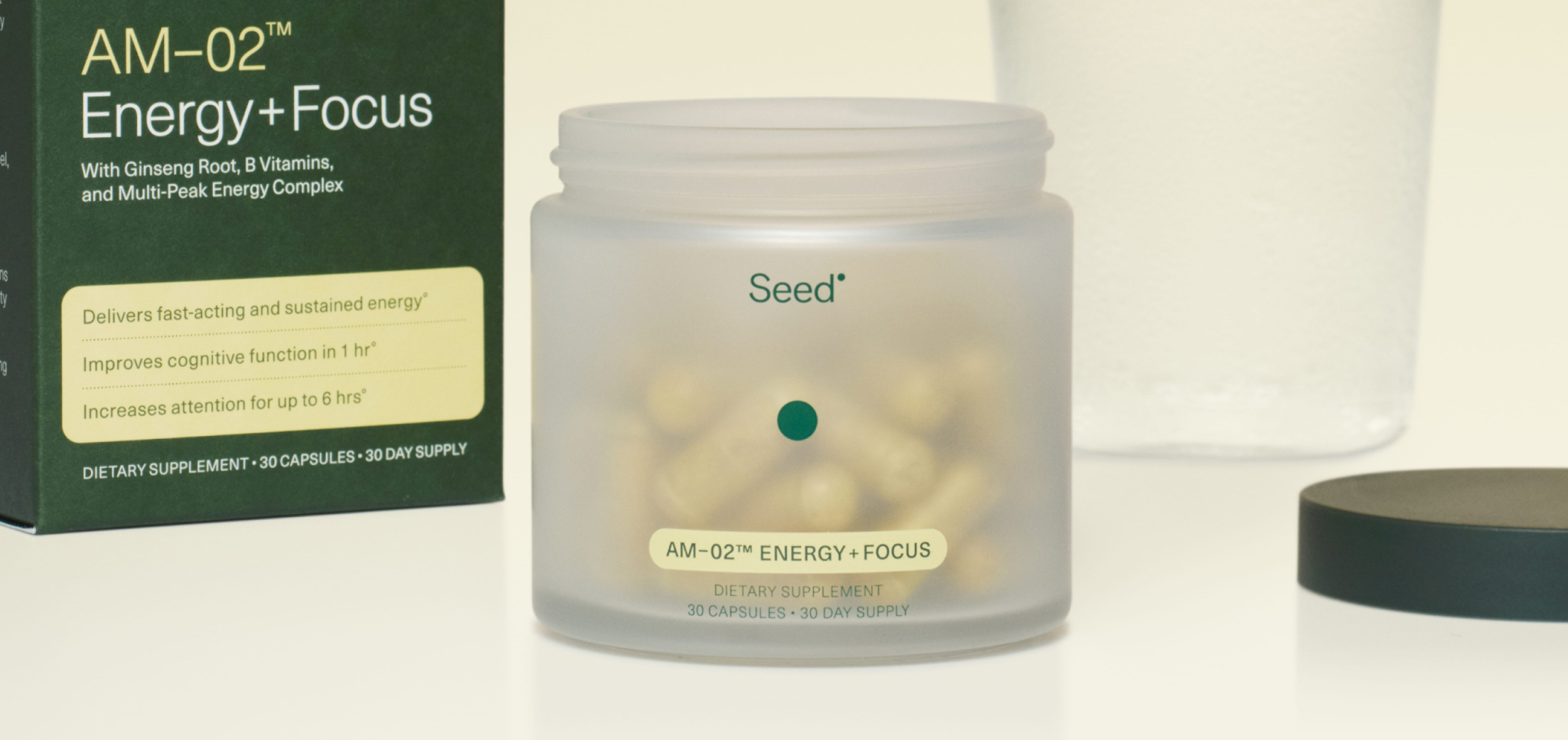
The GABA helps smooth out the experience, supporting sustained mental stamina without the overstimulation or jitters that can come from caffeine-based energy products. Think: clear-headed productivity, not wired-but-scattered energy.
💡 Pro Tip: If you’re looking for cognitive support that doesn’t leave you feeling jittery, look for formulas that balance energizing nootropics with calming compounds like GABA.
Finding the best GABA supplement for stress means shifting how you think about supplements entirely. Instead of chasing the highest dose of a single ingredient, the most effective approach considers your entire biological system—from your gut microbiome to your brain’s neurotransmitter balance.
By understanding GABA’s role not just in the brain but also within the gut-brain axis, you can choose a supplement that’s intelligently formulated to support your body’s innate ability to find calm. Whether your goal is to unwind for a night of deep sleep or to achieve a state of clear, sustained focus, the right GABA formula can be a powerful tool for navigating life’s daily pressures.
The real measure of the best supplement isn’t how much GABA it contains—it’s how well it works with your biology.
🌱 True calm doesn’t come from a single ingredient; it’s cultivated through understanding how your body’s systems work together.
GABA is generally well-tolerated, especially at doses commonly found in supplements.
The United States Pharmacopeia conducted a safety review and found that up to 120 mg per day for 12 weeks was not associated with adverse effects.2
Some people may experience mild side effects like drowsiness or an upset stomach, especially at higher doses. As with any new supplement, it’s always best to consult with your healthcare provider before starting.
The evidence is promising but still developing.
While GABA isn’t an approved treatment for any disorders, many studies show it can help promote relaxation and reduce measures of acute stress.3 Its primary function as an inhibitory neurotransmitter provides a strong biological basis for its calming effects.
The most effective use is for managing feelings of occasional stress rather than as a treatment for a clinical condition. If you’re experiencing persistent anxiety, talk to your healthcare provider.
The best supplement depends on your goals and the scientific rigor of its formulation.
Instead of a standalone GABA product, look for a formula like this:
Timing depends on your desired effect.
For sleep support, taking it 30-60 minutes before bed is ideal. This gives the formula time to promote relaxation as you wind down.For cognitive support and calm focus, taking it in the morning helps set the stage for a productive, balanced day.


True or false: Taking a new probiotic every few months helps build a more diverse gut microbiome.
Overview Gut health isn’t just about digestion anymore—it has a seat at the mental health table too. 🧠 If you’ve ever noticed stomach churn before a big presentation or lost your appetite during a tough emotional week, there’s a reason for that. Your gut and brain are constantly chit-chatting through a complex network, and researchers...
Overview Even for the savviest gut health aficionados, scrolling through probiotic options can quickly turn into analysis paralysis. With so many bottles lining the shelves and flooding your social media feeds, how do you choose the one that’s truly aligned with your health goals and backed by solid science? You’re not alone in seeking clarity...