








Next Article
Can Probiotics Help With Strep Throat?
6 minutes
Do probiotics really work for urinary tract infections? This guide dives into the nuanced science, explaining how certain probiotic strains can support the vaginal microbiome as a line of defense, what the clinical evidence says, and how to choose a high-quality product for urogenital health.
If you’ve ever dealt with a urinary tract infection (UTI), you likely know the signs. The telltale burn, the endless bathroom runs, and maybe even that sinking feeling as your doctor hands over yet another antibiotic prescription. And if you’re someone who gets chronic UTIs, it’s only natural to wonder: Is there any way to break the cycle?
That’s where probiotics come in. Maybe you’ve seen claims online that taking a probiotic can stop UTIs in their tracks. It’s an appealing idea, but—real talk—it’s not quite that simple. While there’s scientific promise for certain strains as a proactive, preventive step for UTIs, it should not be seen as a treatment.
And that’s the thread to keep in mind as we dig in. Probiotics can support the ecosystem that keeps uropathogens (those UTI-causing bacteria) at bay. But they aren’t a replacement for antibiotics when you have an active infection. Here’s what the latest science actually says, what a healthy microbiome has to do with UTIs, and the details to consider before starting any new routine.✨
You might think of a UTI as a bladder problem, but the root often lies in your vaginal microbiome. This is your microbial security squad—a healthy, Lactobacillus-dominated ecosystem producing lactic acid to keep things just acidic enough to stop troublemakers like E. coli from setting up shop.1
But life happens: antibiotics, sex, even hormone shifts can knock this balance off-kilter. When protective Lactobacillus levels drop, your vaginal pH can rise, making things easier for uropathogens to move in and start the climb toward your bladder. That’s often the spark that leads to a UTI.1
What’s the bottom line? When your vaginal microbiome is in good shape, your urinary tract has a stronger defense system. It’s kind of like having a bouncer at the door (but way more science-y and less likely to check your ID).
This is where things get interesting—and complicated. The connection between Lactobacillus and urinary tract health is strong enough that researchers have looked at whether supplementing with these microbes could help prevent UTIs. And the evidence? It’s mixed (but encouraging for prevention).
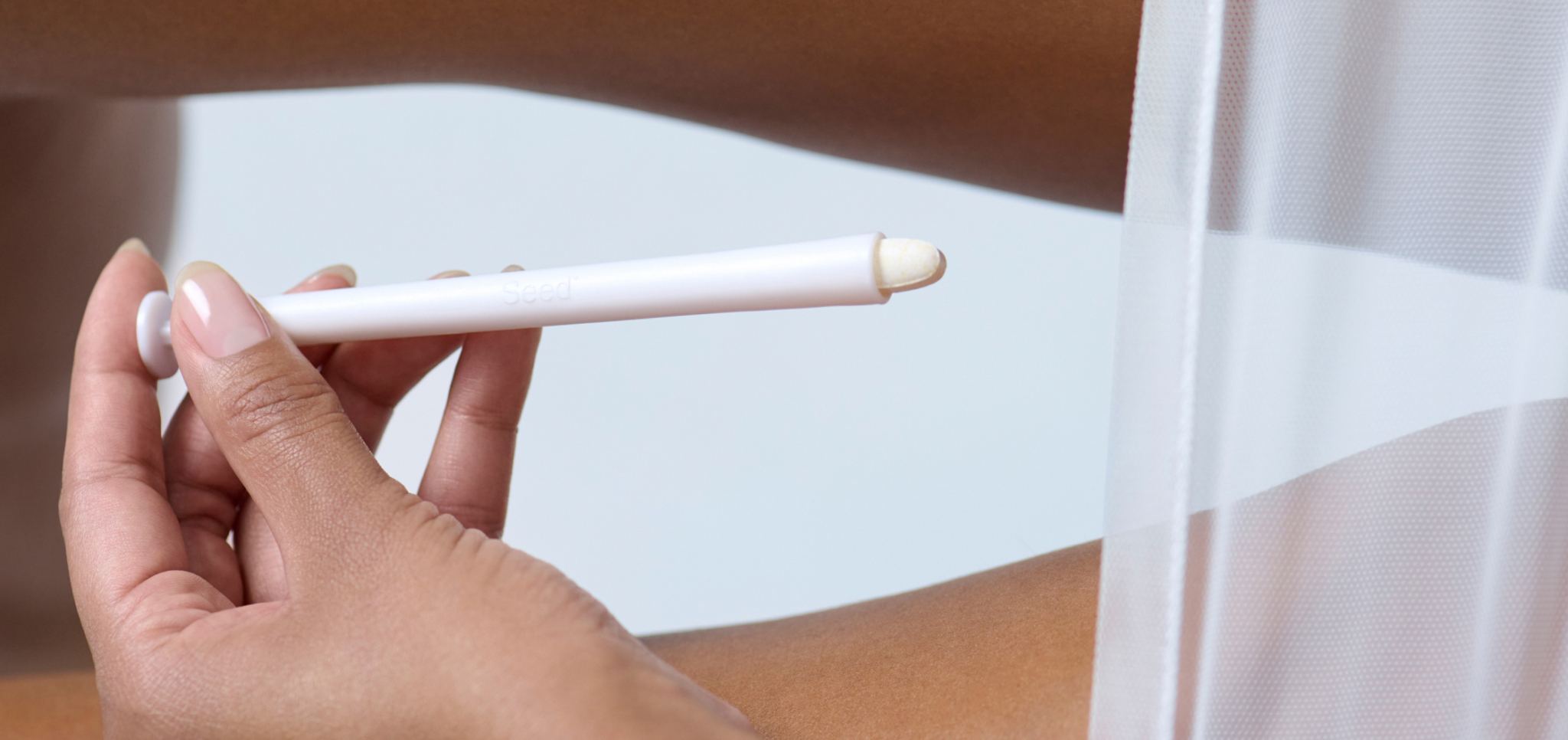
For example, a recent trial followed 174 premenopausal women with histories of recurrent UTIs and found that both oral and vaginal probiotics (with specific Lactobacillus strains) led to fewer symptomatic UTI episodes over four months.2 Another study looked at vaginal Lactobacillus crispatus CTV-05 suppositories and found that women who used them after a UTI had fewer recurrences than those using a placebo.3
But, just as you’re getting excited, here’s the flip side: a review and meta-analysis found that, when all data was pooled, probiotics didn’t significantly reduce UTI recurrence.4 So—what’s up with that?
It comes down to details. Not all probiotics are created equal, and their impact depends on strain specificity, dose, delivery, and the individual’s microbiome. And, of course, not all studies are set up the same way or look at the same populations.
👉 TL;DR: Probiotics are not a treatment for UTIs, but certain strain-specific probiotics may help prevent them by reinforcing your body’s natural microbial defenses.
Okay, let’s get practical. If probiotics might help prevent UTIs, does it matter how you take them? Is swallowing a capsule enough, or should you look for a vaginal suppository?
One trial found that vaginal probiotics led to a lower rate of recurrent UTIs compared to oral-only probiotics and placebo.2 That means for some, a targeted approach may be best, but there’s no universal answer yet. Your microbiome (like your taste in podcasts) is unique.
🔬 Science Translation: Both oral and vaginal probiotics have a place in UTI prevention research, but results depend on the strains, how they’re delivered, and your body’s own microbial baseline.
If you’re staring at a wall of probiotic bottles, here’s what the science spotlights: Lactobacillus crispatus is the MVP when it comes to urogenital health.1,5 This strain is adept at producing lactic acid and sticking to the vaginal lining, making it a key player in the ecosystem.
Other Lactobacillus strains studied for urogenital support include L. rhamnosus, L. reuteri, and L. gasseri. But here’s the thing: Just seeing “Lactobacillus” on a label isn’t enough. Benefits are strain-specific, which means you should look for the letters and numbers after the species name. Those designate the exact microbe that’s been studied for a particular effect.
Dirk Gevers, Ph.D., explains, “When we talk about probiotics, the details matter immensely. Simply having Lactobacillus or Bifidobacterium in a product doesn’t tell you what it does. The specific strain designation—the letters and numbers that follow the species name—is what links a microbe to its researched benefits. Without that strain-level specificity, claims about efficacy lack a scientific foundation.”
💡 Pro Tip: When shopping for a probiotic, prioritize formulas with clearly listed, clinically studied strains. More is not always better—strain specificity is the name of the game.
There are a few must-knows before you pop that first capsule:
🦠 Science Translation: Prevention is about reinforcing what’s already working in your microbiome. Think of probiotics as reinforcements for your microbial security system, not as a cure or treatment for an active infection.
Should you take probiotics for UTI prevention? Here’s where the science stands: Probiotics (especially certain Lactobacillus strains) may play a role in keeping your urinary tract’s microbial defenses strong. However, they’re not a replacement for medical treatment. The real-world benefit comes from choosing the right strain, in the right dose, for the right reason—and remembering it’s supportive, not curative.
While you can’t “probiotic” your way out of active infections, you can support the ecosystem, helping lower your risk over time.
🌱 Good health isn’t hacked—it’s cultured.
Remember, probiotics don’t treat UTIs directly. Instead, they work by supporting and fortifying your body’s microbial environment in more subtle ways, which takes time. Research on probiotics for prevention of UTI occurrence showed varying follow-up lengths, from weeks to a year.4
For most healthy individuals, probiotics are considered safe and are unlikely to make a UTI worse. However, if you’re immunocompromised or have serious underlying health conditions, speak with your doctor before starting probiotics. An active UTI requires medical treatment, and probiotics should not be used as a substitute for it.
There is no single “best” probiotic for everyone. Research points to strains from the Lactobacillus genus, especially L. crispatus, as important for a healthy vaginal microbiome, which plays a role in urinary tract health. Look for products that list specific, clinically studied strains rather than generic species.1,5
Taking probiotics during and after a course of antibiotics is often recommended to help support the gut microbiome, which can be disrupted by antibiotics. To maximize effectiveness, your doctor may recommend taking your probiotic at least two hours apart from your antibiotic dose. But always check with them for personalized advice.




Overview So, you’re pregnant! (Congratulations 🎉) If you’re like most parents-to-be, you’re swimming in advice—from the earnest advice you got from your OB-GYN to the well-meaning but slightly wild that comes from your relatives and 2 a.m. Google deep-dives. When every choice feels monumental, even something like “probiotics for pregnant women” can sound like a...

Antibiotics can leave your gut feeling off balance. Find out which probiotic strains may help support your microbiome, how to time them for maximum benefit, and why fiber is your gut's best friend during recovery.

There’s a wealth of information that can be found on the label of a probiotic. You may be used to seeing MILLIONS and BILLIONS plastered all over, but what do these numbers mean? And how are they measured?