








Next Article
How Long Should You Take Probiotics Before You See Results?
10 minutes
This guide identifies the best probiotic strains for women's health concerns from vaginal microbiome balance to digestive comfort. Learn about L. crispatus for vaginal health, strain-specific benefits for women over 50, and how to evaluate quality beyond marketing claims.

You’ve likely seen shelves full of “women’s probiotics,” each claiming to be the best. But sorting through the marketing noise can be frustrating. Which products actually deliver on their promises—and which just look good in pink packaging?
The truth is, there’s no universal “best probiotic for women.” Instead, it’s about choosing the right strains for your specific health goals: digestive comfort, vaginal microbiome balance, support during menopause, and other life-stage-specific needs.
This guide unpacks what science really says about probiotics and women’s health—highlighting the strains with the strongest evidence and helping you make an informed, effective choice.
When shopping for a probiotic, you’ll quickly notice how many products claim to be “specially formulated” for women. But is there actually a biological basis for gender-specific probiotics? Let’s first understand the basics of probiotics before we get into the gender-specifics.
One of the most important concepts in probiotic science is strain specificity. Not all strains within the same species have the same effects! A probiotic’s benefits depend on the exact strain used—not just its genus (Lactobacillus), or species (rhamnosus), but its full designation (e.g., Lactobacillus rhamnosus GG).1
Each strain has a unique set of characteristics, like the ability to adhere to intestinal or vaginal tissue, survive stomach acid, or produce lactic acid. These distinctions matter far more than generalizations about which probiotics are “for women.”
While probiotics are often labeled “gender-specific,” most strain-specific benefits apply across different groups of people. The exception is vaginal health, where targeted strains—especially Lactobacillus crispatus—have been shown to support microbial balance and optimal vaginal pH.2
Most high-quality studies on probiotics include both men and women. Rather than focusing on “women’s formulas,” the more evidence-based approach is to match specific strains to your health goals. What are you trying to focus on?
For example:
In short, start with your health needs—then look for strains that have been clinically studied for that specific outcome.
Probiotics can offer several evidence-backed benefits that may be particularly relevant to women’s health concerns:
Poop Fact! 💩 Historically, women report higher rates of constipation and IBS than men. Fortunately, several probiotic strains have been studied for their ability to support digestive comfort, stool regularity, and ease of evacuation. (aka, more comfortable poops.)
Strains such as L. plantarum LP01 and B. breve BR03 have been associated with improvements in stool consistency and bowel habits.7 Similarly, B. longum BB536 has been shown to support intestinal function and microbial balance.
Cardiovascular disease is the leading cause of death among women globally. But evidence suggests that select strains—like L. plantarum CECT 7527 and L. plantarum ECGC—can help maintain healthy cholesterol levels, which could be particularly relevant post-menopause when estrogen’s heart-protective effects tend to decline.4
The gut and skin are more connected than they might seem. What’s happening in your microbiome can—more or less—show up on your face. This relationship, known as the gut-skin axis, links digestive health to skin issues like acne and atopic dermatitis (AD; also known as eczema.)8
Some strains have shown promise here. For instance, L. salivarius LS01 and B. breve BR03 have been studied for their ability to support skin clarity by helping regulate inflammation and balancing the gut microbiota.
The gut and brain are in constant conversation through what scientists call the gut-brain axis—a bidirectional communication network involving the vagus nerve, immune signaling molecules, neurotransmitter precursors, and microbial metabolites.9
Here’s why that matters for women: chronic stress (which women often report at higher rates) can alter gut microbiome composition through cortisol release via stress hormone activation and HPA axis signaling. That disrupted microbiome can contributes to mood challenges through reduced production of calming neurotransmitters like GABA and serotonin.
Certain gut bacteria actually produce GABA, the brain’s primary calming neurotransmitter. Others influence the availability of tryptophan—the precursor for serotonin (mood regulation) and melatonin (sleep). While gut-produced GABA doesn’t cross the blood-brain barrier directly, it may influence mood and stress responses through vagal nerve signaling and peripheral pathways.10
Specific strains studied for stress and mood support include:
This creates a stress-microbiome-immunity triangle where each influences the others. Supporting gut health through targeted probiotic strains may be one tool for managing stress, alongside sleep, movement, and other wellness practices.
Certain probiotic strains can actually help produce important nutrients—like B vitamins and folate—right in the gut.11 That’s especially relevant for women, whose nutritional needs shift across life stages, from menstruation to menopause.
Take Bifidobacterium adolescentis, for example—some strains have been shown to support the body’s ability to absorb folate, a nutrient that plays a key role in cellular health and hormone function.
Perhaps the most gender-specific aspect of probiotics relates to one of the most delicate ecosystems in the human body: the vaginal microbiome (VMB). This microbiome plays an important role in women’s reproductive and urogenital health, as the VMB undergoes many changes throughout life.
So, finding a quality vaginal probiotic requires a little bit of understanding from the consumer’s perspective.
In a healthy vaginal microbiome, Lactobacillus species usually take the lead. These microbes produce lactic acid, which keeps the vaginal environment slightly acidic—typically with a pH between 3.8 and 5, which can vary based on things like age, menstruation, and estrogen levels.12 That acidity helps protect against unwanted bacteria, creating a kind of natural security system.
Among the Lactobacillus species, L. crispatus is especially well-studied. Dominance of this species has been linked to better vaginal health outcomes in multiple studies. It produces high levels of lactic acid, forms a protective biofilm, and may help keep harmful microbes from taking hold.6
Several factors and products can disturb the delicate balance of the vaginal microbiome:
Imbalance may lead to conditions like bacterial vaginosis (BV), yeast overgrowth and infections, or recurring urinary tract infections (UTIs).14
When it comes to vaginal health, research strongly supports Lactobacillus crispatus as a foundational strain.2 This species is commonly prevalent in a healthy vaginal microbiome, playing a lead role in maintaining balance and resilience.
L. crispatus is one of the most researched species when it comes to vaginal health, thanks to its unique ability to help create and maintain a stable, protective microbial environment.
L. crispatus supports vaginal health in several key ways:
Research links L. crispatus-dominant microbiomes to greater stability and lower incidence of common disruptions like bacterial vaginosis, yeast imbalance, and group B streptococcus colonization during pregnancy.6
Certain oral probiotics are formulated with vaginal health in mind—but here’s the thing: there’s no direct route for bacteria to travel from your gut to your vagina. (But they may be “linked” in other ways!) That said, some researchers have suggested that oral probiotics might still influence the vaginal microbiome indirectly, possibly through interactions with the immune system.16 It’s a cool idea, but the exact pathways are still being studied. (Yet another reason why more research on vaginal health is needed! Just saying.)
On the other hand, vaginally delivered probiotics (tablets/suppositories) bypass the digestive system entirely and are applied directly where they’re intended to work. This method allows for more targeted contact with vaginal epithelial cells, which may help encourage beneficial changes with continued use.
The bad news? Vaginal probiotics are newer and less widely available than oral probiotics, which means they’re not always easy to find on store shelves. 😞
The good news? Let’s just say you’ve stumbled into the right corner of the internet. 😉 Here’s the story behind the first-of-its-kind vaginal probiotic →
Choose oral probiotics if:
Choose vaginal probiotics (suppositories/tablets) if:
Consider both if:
A well-balanced vaginal microbiome—especially one rich in Lactobacillus crispatus—has been associated with higher chances of conception and healthier pregnancy outcomes.6 If you’re planning to conceive, supporting vaginal microbial balance may be one more way to prepare your body!
Protocols for vaginal probiotic use often fall into three categories:
Clinical studies suggest that these strategies can support the reestablishment and maintenance of a balanced vaginal microbiome and help sustain optimal pH conditions over time.2
Menopause brings a drop in estrogen levels that affects both the gut and vaginal microbiomes.
These changes may contribute to:
Here’s a lesser-known angle: your gut microbiome plays a role in how your body metabolizes estrogen.
The collection of gut bacteria capable of metabolizing estrogen is sometimes called the “estrobolome.” These bacteria produce enzymes that influence estrogen’s active and inactive forms, which in turn may affect hormonal balance throughout the body—including during perimenopause and menopause when estrogen levels fluctuate dramatically.18
Research is still emerging on exactly how probiotic strains might support this process, but the connection between gut health and hormonal transitions is becoming clearer. Dysbiosis (microbiome disruption) has been linked to hormonal imbalances, menstrual irregularities, and PMS symptoms in some studies.19
For women navigating menopause, supporting a diverse, balanced gut microbiome may be one more piece of the wellness puzzle—alongside sleep, stress management, and nutrition.
For women over 50, certain probiotic strains may support:
Transparency matters. Look for products that openly share their testing methods for contaminants and allergens.22 Beyond this, choosing a probiotic doesn’t need to be complicated—a few evidence-based principles can guide you.
The most effective and trustworthy probiotics list the full strain designation: Genus, species, strain. This allows you to assess clinical evidence tied to that exact strain—not just its broader species.1
More isn’t always better.
Colony Forming Units (CFU) measure viable bacteria that form colonies, but many don’t reflect how many bacteria survive digestion. Advanced enumeration methods like Active Fluorescent Units (AFU) offer a more precise count by capturing all viable cells—not just those that can grow in a lab dish.23
What really matters is whether the dose aligns with what was studied in clinical trials.24
Here’s a concrete example: A product containing 1 billion CFUs of a clinically-studied strain (like Bifidobacterium longum BB536 at doses validated in research) can be more effective than a product boasting 50 billion CFUs of unstudied or generic strains.
Why? Because the studied strain has demonstrated specific mechanisms—adhering to intestinal lining, surviving stomach acid, producing beneficial metabolites—that generic bacteria haven’t proven. More isn’t better if you don’t know what those bacteria actually do.
Focus on strain designation and clinical validation over astronomical CFU counts.
Even the best strains won’t work if they don’t survive the journey through your body.
💊 The most effective probiotics use delivery systems that:
🩷 For vaginal probiotics, specifically, look for:
A note on osmolality for vaginal products: Osmolality refers to the concentration of dissolved particles in a solution. This is important for vaginal health products because vaginal tissue has a specific osmolality range. Products with osmolality above recommended levels may cause cellular damage or irritation. While specific research on probiotic suppositories is limited, this consideration draws from broader studies on vaginal health products. 🔎 When possible, look for products that disclose their osmolality testing or indicate they’re formulated within safe ranges for vaginal tissue.
Consistency matters more than the specific time of day.
Many people find taking probiotics with a meal helps minimize any temporary digestive adjustments, as food can buffer stomach acid and support bacterial survival through digestion. That said, delivery technology (like advanced capsules or vaginal suppositories) often handles acid protection, so timing flexibility increases with well-designed products.
For vaginal probiotics, most protocols recommend evening application before bed to maximize contact time with vaginal tissue.
If you’re taking medications, check with your doctor or pharmacist about the best timing for your routine—especially if you’re on antibiotics or medications that affect gut motility.
Bottom line: Pick a time that fits your schedule and stick with it. Your microbiome thrives on routine.
How you store probiotics affects their viability:
When you first introduce probiotics, your gut is essentially welcoming new microbial residents to an already busy ecosystem. Some people experience temporary digestive changes during the first 1-2 weeks—think mild bloating, gas, or shifts in bowel habits.
This is normal. It’s your microbiome adjusting as the new strains interact with your existing bacteria. (Think of it like adding new residents to an already busy city—there’s a period of reshuffling as everyone settles in.)
If you experience discomfort:
For most people, any initial changes are mild and short-lived. And once you’re past the adjustment period? You’re supporting long-term microbial balance.
While probiotics are generally considered safe for most healthy adults, certain groups should consult a healthcare provider before starting:25
You’ve probably heard that eating yogurt, kefir, kimchi, or sauerkraut counts as “taking probiotics.” And while these fermented foods do contain live bacteria, here’s an important distinction: not all bacteria in fermented foods meet the scientific criteria to be considered true probiotics.
Probiotics are live microorganisms that have specific health benefits when taken correctly. They need clinical evidence showing that their exact strains do what they claim. The bacteria in your morning yogurt or homemade kimchi haven’t necessarily been studied for targeted health outcomes like strains in clinically-formulated probiotics.26
That said, fermented foods have value. They add bacterial diversity to your gut ecosystem, supporting overall microbiome resilience and function.
Examples of fermented foods with live cultures:
Fermented foods support general microbial diversity, while clinically-studied probiotic strains target specific health outcomes with evidence behind them. Ideally, your diet includes both.
🤓 Want to dive deeper? We explored this distinction in detail here.
The best probiotic for women has nothing to do with pastel packaging or “just for her” labels—and everything to do with science. What matters is choosing clinically studied strains that align with your specific health goals.
Remember that strain specificity, clinically studied dosages, and smart delivery technology matter more than CFU/AFU counts or gendered branding. Because the best probiotics for women aren’t packaged in pink—they’re med-locked in science. 🌱
It depends on what you’re trying to achieve.
Top probiotic brands offer different formulas for specific needs. Look for products with—for example—L. crispatus DSM32717 for vaginal health, B. longum BB536 for digestive relief, or L. plantarum ECGC for heart health. The best choices contain these clinically-studied strains at effective doses.
Look at the product label!
Lactobacillus species is the strain most associated with maintaining a healthy vaginal pH, which is done through lactic acid production.12 Vaginally administered probiotics ensure maximal contact with vaginal epithelial cells, which gives them a better chance to make beneficial changes to the vaginal microbiome.
🛒 Just be aware that vaginal suppository options are harder to find on store shelves than oral products.
Yes, probiotics work as long as they’re formulated correctly! Effective women’s probiotics contain clinically-validated strains at proper doses, delivered in ways that ensure they survive to reach their target.1
Generic products lacking specific strain information typically show less reliable results.
It depends on what you’re targeting and which delivery method you’re using.
For gut health benefits (digestion, regularity, immune support): Most people notice changes within 2-4 weeks of consistent use. That’s roughly how long it takes for new bacterial strains to establish presence in the gut ecosystem and begin influencing local metabolism and immune signaling.27
For vaginal health with suppositories/tablets: Initial reset protocols often span 1-2 weeks with more frequent application, followed by less frequent maintenance dosing. Some women notice shifts in vaginal comfort or odor within the first week.
The key is consistency. Probiotics are transient—they work while you’re taking them but don’t permanently colonize. Missing doses means interrupting the benefits, so daily (or protocol-appropriate) use is essential for sustained results.
Look for:



Find the best probiotic strains for men's health needs, from digestive support to cardiovascular health, based on clinical research instead of marketing claims.
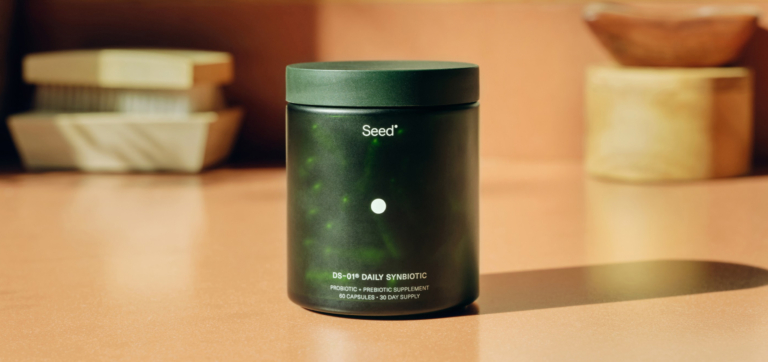
You don’t have to go with your gut—at least not when choosing a probiotic. Skip the marketing hype and learn how to find the right one based on strain, dosage, quality, and more.

Expecting a baby? Learn how probiotics support your pregnancy by promoting digestive comfort and vaginal health. From managing morning sickness to restoring microbial balance, discover the science-backed benefits of probiotics during pregnancy and find expert guidance on choosing the right product.