








Next Article
Bone Health Supplements: A Guide to Stronger Bones
8 minutes
Most people take too much melatonin, disrupting their natural sleep rhythms. This evidence-based guide reveals why bioidentical dosing that mimics your body's natural production leads to better sleep without a hangover effect, plus how combining melatonin with adaptogens enhances restorative rest.
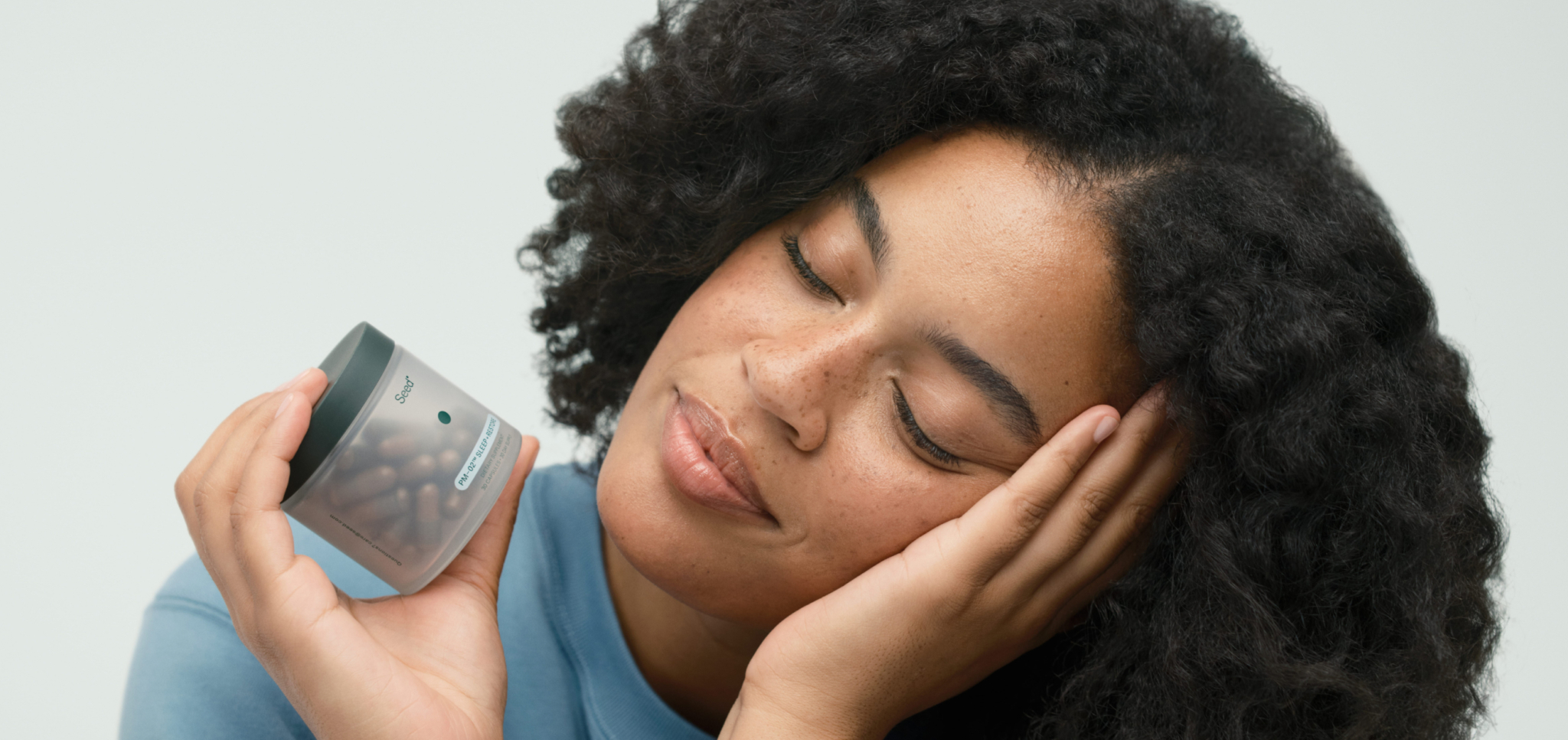
“If I fall asleep right now, I’ll get 4 hours and 37 minutes of sleep.” We’ve all done the mental math when we’re struggling to get some shut eye. And on some nights, you’ve probably reached for a bottle of melatonin. 💊 And on the really bad sleep nights, you’ve maybe even considered an extra dose. Then, inevitably, you feel like you’re walking through molasses the next morning. Can that 10 mg tablet really cause that much sluggishness the next day?
The truth is, most melatonin for sleep supplements flood your system with 10 to 50 times what your brain naturally produces. It’s like trying to adjust your thermostat by hitting it with a sledgehammer—sure, something will happen, but it may not be what you intended. The real science of melatonin for sleep reveals a different story: when it comes to this hormone, precision often beats power.
Think of melatonin as your body’s internal “lights out” signal. As darkness falls, your pineal gland—a tiny pine cone-shaped structure deep in your brain—begins releasing this hormone like a gentle tide rolling in.
It doesn’t knock you unconscious; instead, it creates a drowsy, relaxed state (what sleep researchers call “quiet wakefulness”) preparing your body for the transition to sleep.1
But here’s where things get interesting. Your pineal gland produces between 0.1 and 0.9 milligrams (mg) of melatonin each day. Levels start to decline in your twenties and often become negligible by the time you reach 60.2
Yet walk into any pharmacy, and you’ll find supplements containing 3mg, 5mg, even 10mg per dose. For some people, these mega-doses are like your brain expecting a whisper and getting a foghorn instead.
Research shows that taking a typical melatonin supplement of 1-5mg can raise blood levels of melatonin 10-100 times higher than your natural nighttime peak.3
Your melatonin receptors, overwhelmed by this flood, may essentially start ignoring the signal—similar to how constant background noise eventually fades from your awareness, even when it’s still there.
Research from MIT found something counterintuitive: subjects with age-related insomnia taking just 0.3mg of melatonin actually slept better than those taking 3mg.
The higher dose increased side effects, such as lowering body temperature and keeping melatonin levels elevated into the next day, which can lead to daytime sleepiness and grogginess.4
Dr. Dirk Gevers, Med-Lock’s Chief Scientific Officer, is a microbiome expert exploring the precision approach to sleep supplementation. He explains the philosophy behind bioidentical dosing. “The goal isn’t to override your sleep system. It’s to support it,” he says. “When we match what the body naturally produces, we’re working with millions of years of evolution, not against it.”
Bioidentical melatonin dosing means taking amounts that replicate your body’s natural production—typically between 0.3mg and 0.5mg.
A study published in Sleep found that this physiological dose elevated serum melatonin to normal nocturnal levels without causing the supraphysiological spikes associated with larger doses.5
Your natural melatonin doesn’t dump into your system all at once. It rises gradually as bedtime approaches, peaks in the middle of the night, then tapers off toward morning. Think of it like a perfectly choreographed dance that lasts all night long.
Advanced formulations now use dual-phase release technology to match this natural pattern:
This biphasic approach aligns with your circadian rhythm rather than fighting it, supporting both sleep onset and sleep maintenance without the next-day sluggishness effects.6
Here’s what those mega-dose melatonin bottles won’t tell you: if your cortisol (stress hormone) is still elevated at bedtime, all the melatonin in the world won’t give you restorative sleep. It’s like trying to sleep with the lights on… technically possible, but far from ideal.
Your cortisol and melatonin should work like a seesaw.
As evening approaches, cortisol should drop while melatonin rises. But modern life—with its blue screens, work emails at 10 PM, and general despair about, well, everything—keeps cortisol elevated long past its bedtime.
This is where clinically studied adaptogens like ashwagandha may help. In a randomized controlled trial, participants taking just 120mg of Shoden® ashwagandha daily for six weeks showed a 72% improvement in sleep quality compared to 29% in the placebo group.
What stands out most? They didn’t just sleep longer. They experienced more restorative sleep, waking up feeling actually refreshed.7
The mechanism: Ashwagandha may help balance cortisol levels, creating the hormonal environment necessary for melatonin to work effectively. You need balanced cortisol and optimal melatonin for truly restorative sleep. Addressing one without the other is like trying to clap with one hand. (And no, neurodivergent readers: hand-flapping doesn’t count here. 😆)
If the idea of your gut affecting your sleep sounds strange, consider this: your gut produces 400 times more melatonin than your pineal gland. While gut melatonin doesn’t directly make you sleepy, it plays an important role in maintaining the gut-brain axis, the communication highway between your digestive system and your brain.8
Your gut bacteria also produce GABA, a calming neurotransmitter that helps quiet the mental chatter keeping you awake. Studies show that specific probiotics and prebiotics can influence sleep quality by supporting this gut-brain communication.9
Poor sleep disrupts your gut microbiome, and an imbalanced microbiome disrupts your sleep—a vicious cycle many of us know too well. Supporting your gut with targeted prebiotics while addressing sleep creates a positive feedback loop: better sleep supports a healthier gut, which in turn supports better sleep.
💡 Pro Tip: If you’re serious about improving sleep quality, don’t just focus on the brain. Support your gut microbiome with fiber-rich foods and, when appropriate, clinically studied probiotics.
The internet is full of recycled information, including standard advice for taking melatonin. Many sources default to saying “take melatonin 30 minutes before bed.” But that doesn’t always apply to everyone. Why? Because people seek out melatonin for sleep for different reasons.
Ask yourself this question: Why are you taking melatonin in the first place?
How much melatonin you should take (and when to take it) will depend on your reason for taking it. Research has actually confirmed that the optimal timing depends on what you’re trying to achieve.
Examples for why you may take melatonin for sleep:
While melatonin handles the “when” of sleep, other nutrients address the “how well” you sleep:
There’s also a nutrient that sounds like it’s straight from a chemistry textbook: pyrroloquinoline quinone (PQQ).
But don’t let the intimidating name fool you; it’s actually a powerful supporter of mitochondrial function—those cellular powerhouses that need nighttime to repair and regenerate. Studies show 20mg of PQQ improves sleep quality markers, particularly sleep onset and maintenance.12
Your body needs B vitamins to produce melatonin in the first place. Vitamin B6, in particular, is essential for converting tryptophan to serotonin, which then becomes melatonin.13
The good news is that you don’t need to understand any of that to understand this: Without enough B vitamins, even the “perfect” regimen of melatonin supplementation might not work how you hope.13
Rather than reaching for that 10mg melatonin tablet, consider this evidence-based strategy:
Evening Preparation (2-3 hours before bed):
The Synergistic Approach:
Supporting Factors:
The melatonin mega-dose trend has it backward. Your body doesn’t need a sledgehammer when it comes to sleep support. It needs a gentle nudge in the right direction.
Bioidentical dosing (0.3-0.5mg) that mimics your natural production, combined with stress-balancing adaptogens and gut support, creates the conditions for genuinely restorative sleep. The research is clear: when it comes to melatonin for sleep, precision beats power every time.
Because the people who see the best results with melatonin for sleep aren’t taking more of it. They’re taking it smarter. 🌱
By working with your body’s natural rhythms instead of trying to override them, you can achieve what that 2 AM version of you desperately wants: falling asleep faster, staying asleep longer, and waking up refreshed.
Remember, if you’ve been taking high-dose melatonin, don’t stop abruptly. Gradually reduce your dose over several weeks while incorporating other sleep hygiene practices. Your body’s natural rhythm is still there—it just needs the right support to shine through. 💤
Yes, 10mg is significantly more than your body needs. Your brain naturally produces only 0.1-0.9mg of melatonin nightly, so 10mg is 10-100 times higher than physiological levels. This can cause morning grogginess, disrupted sleep cycles, and reduced receptor sensitivity over time.
Research shows that bioidentical doses of 0.3-0.5mg may actually be more effective for sustained sleep improvement without side effects. Higher doses can cause your melatonin receptors to become less sensitive, requiring even more melatonin for the same effect. This could create a cycle of dependence without delivering better sleep quality.14
Morning grogginess happens when melatonin levels stay elevated past your natural wake time. This commonly occurs with doses above 1mg, since your body naturally produces melatonin in tiny amounts that clear by morning. Mega-doses can maintain high blood levels for 10+ hours, leaving you feeling foggy and sluggish when you wake up.
Switching to a bioidentical dose (0.3-0.5mg) taken 2-3 hours before bedtime—rather than immediately before sleep—helps your supplementation align with your natural rhythm and eliminates the hangover effect.15
Yes, combining low-dose melatonin with ashwagandha addresses both hormonal timing and stress response. While melatonin signals bedtime to your body by working with your circadian rhythm, ashwagandha helps lower cortisol levels that might otherwise interfere with sleep quality and restorative rest.
Clinical studies show ashwagandha can improve sleep efficiency by 72% while supporting the relaxation needed for melatonin to work optimally.7
This combination provides a synergistic approach to support both falling asleep and achieving restorative rest throughout the night.
A 0.5mg dose of melatonin maintains effective levels for 7-8 hours, aligning perfectly with a normal sleep cycle. Blood levels peak within 1-2 hours of ingestion and gradually decline throughout the night, reaching baseline by morning when you naturally wake up.
This mirrors your body’s natural melatonin pattern, supporting sleep without extending into waking hours and causing grogginess. The half-life of melatonin is approximately 40-60 minutes, meaning these lower doses clear your system in time for natural morning awakening without lingering effects.14


Much of what we thought we knew about the microbiome—and how it affects cancer, Alzheimer’s, and lifelong health—has changed in the past 12 months.

There’s an invisible world in, on, and all around us. In celebration of the release of bio-artist Tal Danino’s book Beautiful Bacteria, here is a selection of stunning microbes to feast your eyes on.

Overview When someone says ‘heart health supplement,’ you probably think omega-3s, maybe some garlic. Fair enough—those classics still matter. But researchers are discovering that supporting your heart health starts at the cellular level. Your heart contains more energy-producing mitochondria than any other organ—because pumping blood 24/7 takes serious fuel. (Think of it like running a...