







Next Article
Getting to the Root of Probiotics for Teeth
6 minutes
Strep throat means antibiotics are likely necessary, but what does that mean for your gut? We break down the science of probiotics for strep throat, explaining how they can support your gut during treatment and how certain strains are being studied for oral health. Learn what to look for.
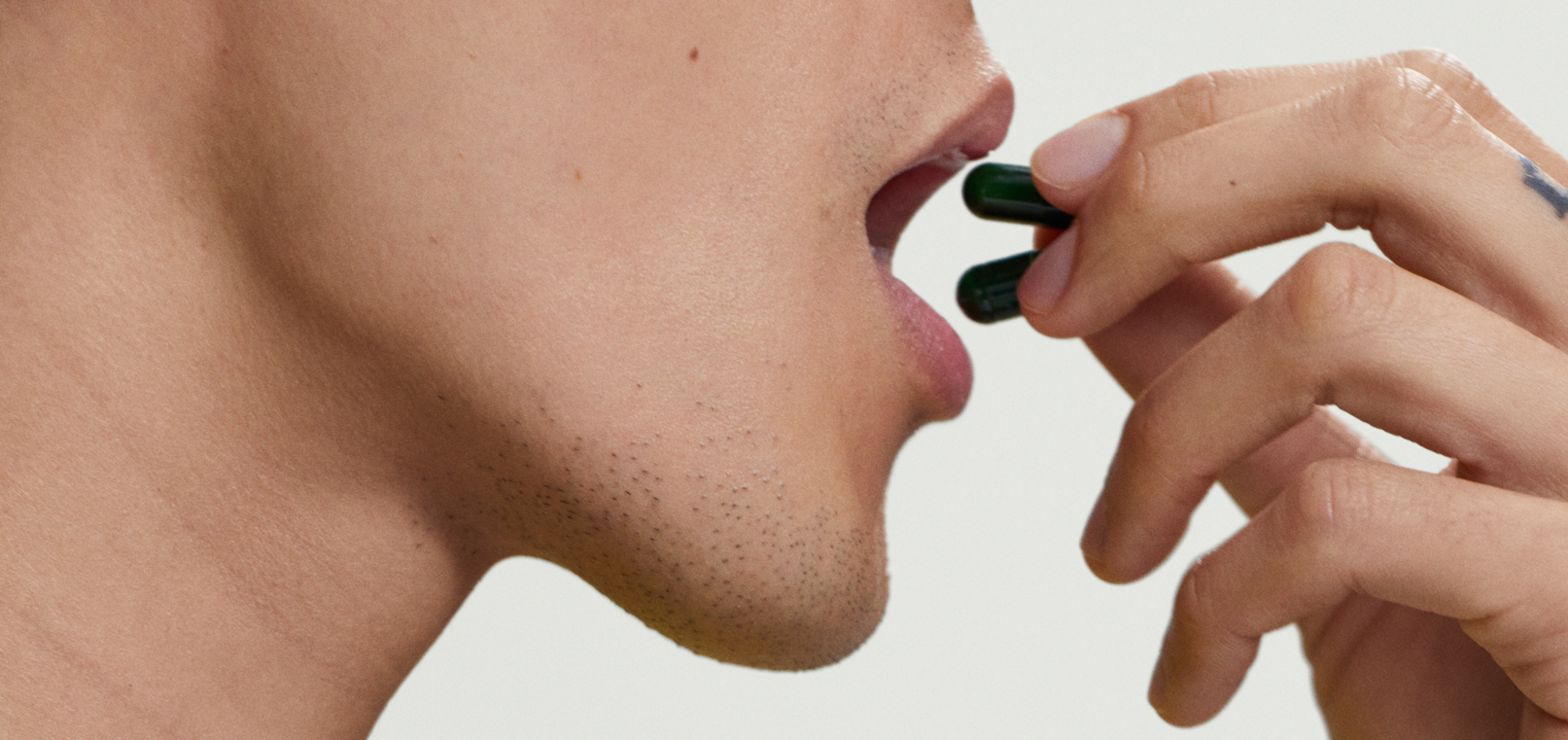
You know the feeling: it starts with a tickle, then a scratch, and before long, swallowing feels like an Olympic sport you never trained for. One look at your throat (or a rapid strep test) and the verdict is in—strep throat. That usually comes with a prescription for antibiotics, as it should.
While you’re grateful for the near-instant and in many cases lifesaving relief, you might start wondering what else antibiotics are doing under the surface. Are they bulldozing your “good” bacteria? Can probiotics help protect you from the fallout? And—let’s be real—could they ever be a replacement for antibiotics themselves?
Let’s clear the air up front: probiotics are not a treatment or cure for strep throat. Strep throat is caused by Streptococcus pyogenes, and antibiotics are the proven, evidence-based way to kick it out of your system.1
But that’s just the start of the story. Probiotics have a science-backed supporting role, both for your gut during antibiotic treatment and possibly for your mouth and throat. Here’s what matters most when you’re facing strep throat—and what to skip.
Before things go sideways, your mouth and throat host a lively community of microbes called the oral microbiome.2 These local residents do more than just keep each other company—they actively make it tough for “outsiders” like harmful bacteria to settle in.2
Strep throat happens when a specific pathogen, Streptococcus pyogenes (aka Group A Streptococcus), manages to break through these defenses, take over, and spark painful inflammation.1
Now, here’s the twist—your gut microbiome (the community of bacteria living in your digestive tract) also plays a starring role in your immune system. A healthy, balanced gut microbiome helps “train” immune cells for a measured, effective response to invaders everywhere, even in your throat.3 That’s one reason why your gut health can influence your odds of bouncing back from infections—including those outside your gut.
If a balanced microbiome matters, could popping probiotics make a difference during strep? Short answer: yes, but not in the way you might hope. They aren’t a replacement for antibiotics (or a “shortcut” to a cure). But they can help support your gut and, maybe, your mouth—if you choose wisely.
Let’s say it one more time for the people in the back: Antibiotics are the only effective treatment for strep throat and are necessary to avoid complications like rheumatic fever.1 Probiotics aren’t regulated as drugs and can’t treat, cure, or prevent strep. Follow your doctor’s instructions (and finish the antibiotics!).
Antibiotics can be lifesavers, but they’re not exactly “choosey” about their targets. They can wipe out a broad range of bacteria—including the helpful ones living in your gut.4 That microbial shake-up is why digestive side effects like antibiotic-associated diarrhea (AAD) are so common, affecting up to 39% of people taking antibiotics.5
This is where capsule-based probiotics can step up. Most don’t set up permanent shop in your gut, but they do offer a kind of “microbial backup” as they pass through.6 Think of them as friendly commuters—not lifers—helping restore balance and nudge your ecosystem toward resilience, especially during and after antibiotics.
While swallowed probiotics do their work in your digestive tract, scientists are also exploring oral probiotics—delivered via lozenge or spray—that target the microbiome in your mouth and throat. Certain strains, like Streptococcus salivarius K12, can produce antimicrobial peptides and compete directly with strep-causing bacteria for resources.7 Early research is promising, but this is still an emerging area.
👉 TL;DR: Don’t skip the antibiotics!
It’s easy to get overwhelmed at the pharmacy—so many probiotic names, so many wild promises. Here’s the deal: with probiotics, the strain (those letters and numbers after the species name) is what matters.
General claims mean nothing if the strain hasn’t been studied for your specific goal.
If your main concern is digestive side effects from antibiotics, some strains stand out:
If you’re interested in supporting your throat’s own ecosystem, there’s one strain worth watching:
Here’s where some well-meaning probiotic advice goes sideways. Not every “good” bacterium does the same job. A strain that’s a gut superstar might be a nobody in your throat—and vice versa.
That’s called strain specificity: the benefit you get is tied to a very specific strain, studied at a defined dose, for a particular outcome.
Dirk Gevers, Ph.D., explains, “The term ‘probiotic’ is incredibly broad. A probiotic’s benefits are strain-specific, not species-specific, and certainly not universal to all probiotics. One strain might support digestive regularity, while another is studied for immune modulation.”
Thinking about taking probiotics with antibiotics while you recover from strep?
Here’s your quick reference:
💡 Pro Tip: Keep a reminder on your phone to help space your doses and stay on track—your microbes (and your gut) will thank you.
Ready to shop? A few tips can save you time, money, and maybe even some digestive drama:
When you’re facing strep throat, antibiotics come first—no ifs, ands, or buts. But you can still support your gut by choosing probiotics with strain-specific evidence for digestive support. And, if you’re curious about oral probiotics, it’s an exciting (but still evolving) area for local throat health.
True efficacy isn’t about “more is better”—it’s about picking the right strain, for the right reason, at the right dose. By combining evidence-based medicine with targeted support for your microbes, you’re cultivating a healthy comeback, inside and out. 🌱 Because when it comes to your gut, the best results are med-locked in science.
No. Probiotics cannot treat or cure a strep throat infection.
Strep throat is a bacterial infection that must be treated with antibiotics prescribed by a healthcare professional to prevent serious complications. Probiotics can be used as a supportive measure, particularly to help with digestive side effects from antibiotics.
When taking amoxicillin or other broad-spectrum antibiotics, it’s beneficial to choose a probiotic containing strains clinically studied to reduce the risk of antibiotic-associated diarrhea. (See above for more information!)
Not exactly. While ingested probiotics for gut health don’t directly prevent throat infections, some research on oral probiotics suggests they may help.
Specifically, daily use of S. salivarius K12 has been shown in some studies to reduce the frequency of recurrent strep throat, particularly in children.16,19 However, more research is needed, and this is not a guaranteed prevention method.
To maximize the effectiveness of your probiotic, you should take it at least two hours before or after your antibiotic dose. This helps ensure the antibiotic doesn’t immediately kill the beneficial bacteria.17
💡 Pro Tip: Continue taking probiotics afterwards to help replenish your good bacteria.


Overview Living with Polycystic Ovary Syndrome (PCOS) can feel like a never-ending balancing act. Hormones acting up, your metabolism in flux, and let’s be honest—a ton of advice that’s equal parts hopeful and confusing. You’ve probably heard it all: Change your diet, exercise regularly, practice mindfulness. But here’s a twist you might not expect: your...

Overview So, you’re pregnant! (Congratulations 🎉) If you’re like most parents-to-be, you’re swimming in advice—from the earnest advice you got from your OB-GYN to the well-meaning but slightly wild that comes from your relatives and 2 a.m. Google deep-dives. When every choice feels monumental, even something like “probiotics for pregnant women” can sound like a...

Overview Have you ever tossed yogurt or a bottle of kombucha into your cart just because the label promised “probiotics”? 🛒 You’re not the only one. But what if this isn’t the best approach? With so many foods advertising live cultures, it’s tempting to assume your gut is in good hands. Are all these so-called...