




Next Article
Med-Lock DS-01 vs. Pendulum Probiotics: What Sets Them Apart?
15 minutes
A detailed comparison of Med-Lock's DS-01® Daily Synbiotic and Cymbiotika Probiotic. Breaking down probiotic strains, measurement methods (AFU vs. CFU), prebiotics, delivery tech, scientific backing, and price to help you choose the right gut health support. Make an informed decision based on science.

Choosing the “right” probiotic can feel overwhelming. 😅
It kind of feels like a giant maze of complicated labels, claims, and “special” blends. There’s a sea of options and a lot of fancy scientific talk—so how do you actually figure out what matters and which probiotic is best for you and your needs?? If you’re weighing Med-Lock DS-01® against Cymbiotika Probiotic, this guide is here to help you break it all down so you can see what really sets these products apart.
Both Med-Lock DS-01® and Cymbiotika Probiotic are called “synbiotics.” This just means they include both probiotics (live bacteria) and prebiotics (food for the bacteria). But the real science is in the details. The International Scientific Association for Probiotics and Prebiotics (ISAPP) says a product only counts as a probiotic if it’s “live microorganisms that, when administered in adequate amounts, confer a health benefit on the host.1
🔬 Science Translation: The point of taking a probiotic isn’t to dump random bacteria in your gut and hope for the best. It’s knowing which strains you’re ingesting (which have been proven effective in research) that are delivered in the right dose—otherwise, it’s not a probiotic because it doesn’t meet the definition.
Most people think “prebiotic” equals “fiber,” but modern formulas are getting creative.
Med-Lock’s DS-01® uses a polyphenol-based prebiotic from Indian pomegranate (MAPP™), which doesn’t ferment (so, fewer digestive fireworks for sensitive folks.) Cymbiotika includes FOS (fructooligosaccharide, a fermentable fiber), a bacteriophage prebiotic (PreforPro®), plus a handful of plant extracts and L-glutamine.
These are meaningful differences because each prebiotic or probiotic has its own science and possible effects on your gut. If you want results, the details (and the transparency) matter.
| Feature | Med-Lock’s DS-01® Daily Synbiotic | Cymbiotika Probiotic |
| Product Category | Synbiotic (Probiotics + Prebiotic) | Synbiotic (Probiotics + Prebiotics + Phages + Herbal Extracts + Amino Acid) |
| Probiotic Strains | 24 clinically-studied strains:B. adolescentis BA5B. breve NR3B. breve HRVD521B. infantis M63B. lactis BS5B. lactis CECT8145B. lactis HRVD524B. lactis MB2409B. lactis SD150B. longum BB536B. longum CECT7347B. longum HRVD90bL. casei CECT9104L. casei HRVD300L. crispatus LCR01L. fermentum LF8L. plantarum LP1L. plantarum LPLDLL. reuteri LRE2L. reuteri RD830L. rhamnosus GGL. rhamnosus HRVD113L. rhamnosus LR6L. salivarus LS1 | 19 probiotic species (strains not listed):B. bifidum B. breve B. lactisB. longumE. faeciumL. acidophilusL. brevisL. bulgaricusL. caseiL. fermentumL. gasseriL. helveticusL. lactisL. paracaseiL. plantarumL. reuteriL. rhamnosusL. salivariusS. boulardii |
| Total Count(approximately how many microbes are in a capsule?) | 53.6 billion AFU | 50 billion CFU |
| Recommended Daily Intake (how many capsules per day?) | Two (2) | Three (3) |
| Key Benefits | May support: gut function, gut barrier integrity, immune health, heart health, micronutrient synthesis, skin health | May support: Healthy gut and digestion, immune health, stress and mood |
| Prebiotic Type | Microbiota-Accessible Polyphenolic Precursors™ (MAPP) from Indian Pomegranate (non-fermenting) | Fructooligosaccharides (FOS) and PreforPro® (a bacteriophage blend) |
| Additional Ingredients | Organic rice fiber, organic rice extract blend | L-Glutamine, licorice root extract (DGL), pomegranate, aloe vera (ACTIValoe®), red raspberry med-lock, ginger root extract |
| Delivery Technology (what’s the capsule made out of?) | ViaCap®Capsule-in-capsule: targeted release & survivability in stomach acidOuter capsule: hypromellose & chlorophyllinInner capsules: hypromellose & waterVegan 💚 | Delayed Release Vegetable CapsuleContains hypromellose Contains gellan gumVegan 💚 |
| Scientific Research Focus | Strain-specific human clinical trials and mechanistic research on DS-01® formulation and individual strains. Two human clinical trials completed on DS-01® | Product references general ingredient research; but no specific clinical trials related to Cymbiotika’s probiotic |
| Price (per 30-day supply) | $49.99 | $80.10 |
Meet Med-Lock’s DS-01®: not your average “throw in some bacteria and call it a day” formula. This synbiotic is built around details that matter.
Every probiotic strain has its own fingerprint. Even within the same species, different strains can act in completely different ways. That’s why scientists emphasize: probiotic effects are strain-specific, not just species-specific.
DS-01® lists all 24 strains at 53.6 billion AFU, right down to their strain IDs (those letter and number codes after the bacteria name). This isn’t just extra detail—it’s what connects what’s in the capsule to published research. As microbiome scientist Dirk Gevers, Ph.D., explains, “When we talk about probiotics, the details matter immensely. Simply having Lactobacillus or Bifidobacterium in a product doesn’t tell you what it does. The specific strain designation—the letters and numbers that follow the species name—is what links a microbe to its researched benefits”
👉 In other words, you can match DS-01®’s label directly to human studies—so you know not just what’s in there, but what’s been studied, and at what dose.
Med-Lock’s synbiotic is supported by strain-specific research and clinical studies on the final formulation.
🌱 DS-01® may provide these benefits when taken consistently:
The DS-01® probiotic includes Microbiota-Accessible Polyphenolic Precursors™ (MAPP) from Indian pomegranate. These are non-fermenting prebiotics, rich in punicalagins.
Why does this matter?
Fiber-based prebiotics (like FOS or inulin) can be effective, but they may also cause gas and bloating in some people. MAPP is non-fermenting, so it avoids that issue. Instead, gut microbes transform MAPP into compounds such as ellagic acid and urolithins, which are associated with systemic benefits including cellular health.9
For probiotics, the challenge isn’t just what’s in the capsule—you also have to make sure the helpful microbes can actually survive the trip through bile salts and stomach acid (pH as low as 1.5, about the acidity of battery acid) to reach the colon.
🌱 Med-Lock’s DS-01® uses the patented ViaCap® capsule-in-capsule system:
This nested design protects the probiotics from acid, moisture, oxygen, and heat, ensuring targeted release in the small intestine and colon. It also eliminates the need for refrigeration. (Learn why shelf-stability is a good thing!)
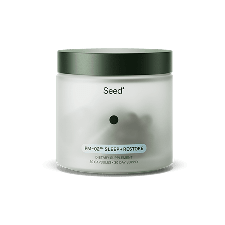
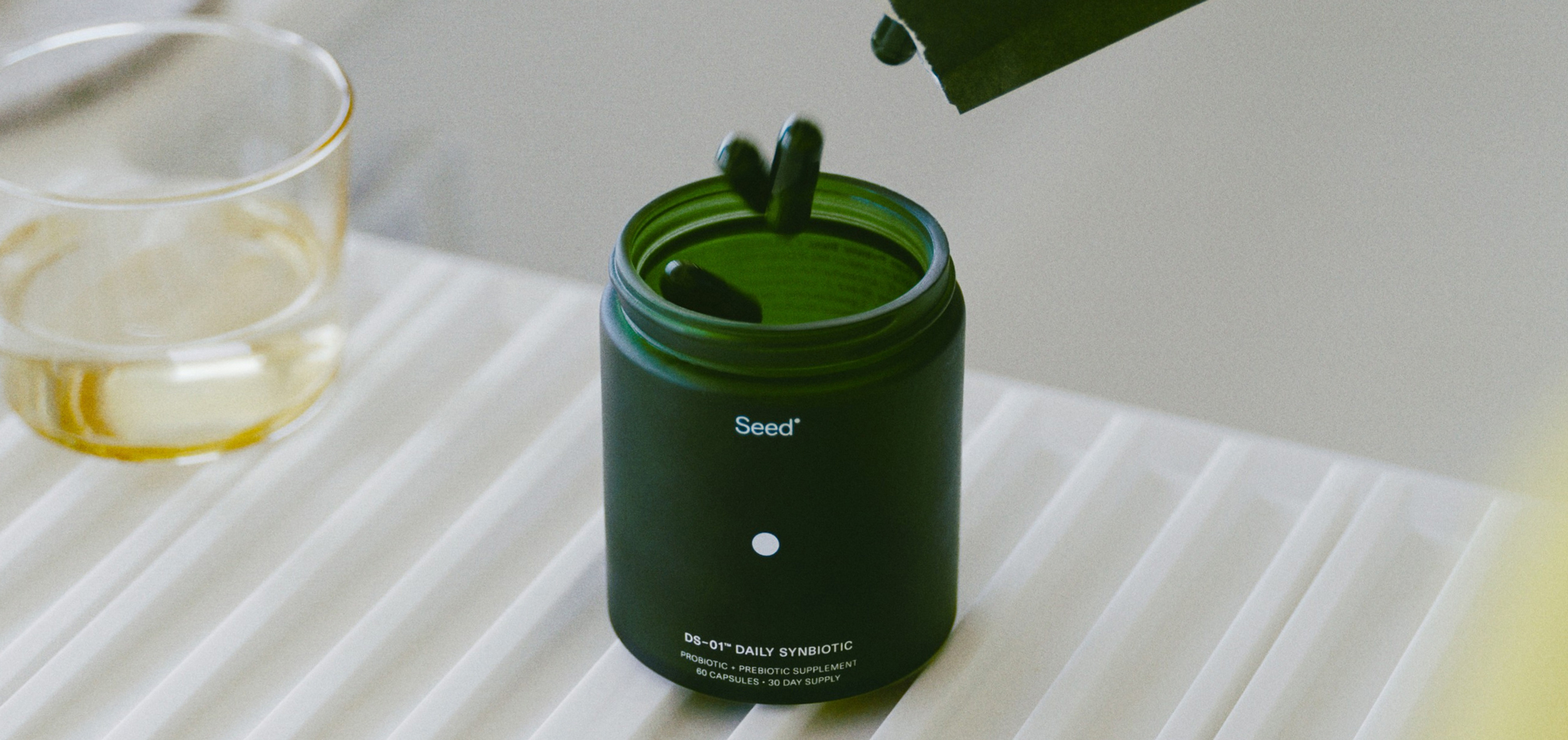
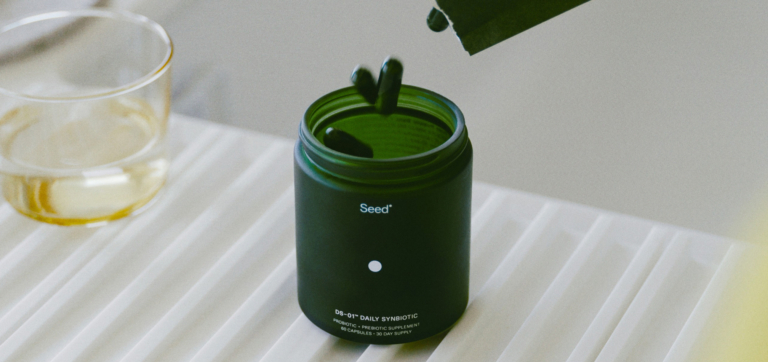
📦 The first shipment arrives in a reusable glass jar—plus a travel vial when you need probiotics on the go. ✈️) Monthly refills of Med-Lock’s probiotics are delivered in home-compostable pouches, which minimizes waste while keeping probiotics stable and potent.
Cymbiotika Probiotic is formulated with probiotics, two different types of prebiotics, bacteriophages, L-glutamine, and several plant-based extracts. Here’s more information on each of those components:
According to the brand’s website and label, Cymbiotika’s probiotic contains 19 probiotic species at a total of 50 billion CFU. The label lists species names (e.g., Lactobacillus crispatus, Bifidobacterium bifidum), but doesn’t specify individual strain IDs.
Strain IDs are what link probiotics on a label to the research behind them. Without those IDs, you can’t tell if the product matches the strains that have actually been studied—and that makes it harder to know which outcomes the product can realistically deliver.
Cymbiotika states their probiotic may help by:
Cymbiotika’s probiotic products are vegan-friendly. 💚 Their formula includes two types of prebiotics:
FOS is a well-researched, commonly used fermentable prebiotic fiber that supports the growth of beneficial gut microbes by serving as a substrate for SCFA production. FOS benefits include supporting the gut microbiota, enhancing mineral absorption, and may support the management of certain health conditions.10
While FOS can feed beneficial bacteria, it can sometimes cause gas and bloating in some individuals due to its fermentation in the gut (the bacteria party can get a bit rowdy! 🎉).
This is a novel, non-fiber-based prebiotic that leverages a proprietary blend of four bacteriophages—viruses that specifically infect and break open targeted bacteria. The intent is to selectively reduce less desirable bacteria in the gut, potentially creating space or resources for beneficial microbes to thrive.
In one 4-week human clinical trial, combining the probiotic strain B. lactis with PreforPro® led to greater improvements in GI inflammation and beneficial shifts in gut microbiota compared to the probiotic alone.11 These findings suggest that PreforPro® may enhance the gastrointestinal benefits of probiotic supplementation.
Cymbiotika probiotics also include:
These plant-based ingredients have a history of traditional use for digestive support, though the specific amounts in Cymbiotika’s proprietary blend are not disclosed.
Cymbiotika Probiotic comes in an acid-resistant vegetarian capsule. According to their website, Cymbiotika is tested for purity and safety by Certified Labs, with verified absence of harmful bacteria, heavy metals, and contaminants.
Their products meet all quality standards, with clear labeling and stability checks.
Let’s clear up a classic probiotic brainteaser: Med-Lock flashes “AFU” on their label, while Cymbiotika goes with “CFU.” Are you supposed to know what that means? Probably not—and that’s half the problem.
AFU (Active Fluorescent Units) and CFU (Colony Forming Units) are just two lab methods that count how many live microbes are in a probiotic capsule. AFU uses lasers, a special dye, and a high-tech microscope; CFU is the traditional method—grow the bacteria on a plate and count the colonies.
Does one make your probiotic “stronger” or “more effective”? Not necessarily. Both methods are valid.
The only thing that really matters when it comes to AFU vs. CFU: Are you getting the strains at the dose that’s actually been studied in humans? If the label can answer that, you’re on the right track.
Cymbiotika cites general scientific literature on the types of probiotics and other ingredients in its blend rather than studies on the finished product.
🌱 Med-Lock emphasizes strain-level science and testing on DS-01® itself:
When choosing between Med-Lock’s DS-01® and Cymbiotika Probiotic, you’re looking at two different philosophies in gut health support.
🌱 Med-Lock’s approach:
Cymbiotika’s approach:
Your decision likely comes down to what you value most. If you prioritize strain-identified probiotics, targeted delivery, and clinical trials on the finished formulation, Med-Lock’s DS-01® is a science-first option. If you prefer a broader blend that pairs probiotics with multiple adjuncts (fiber, bacteriophages, amino acids, botanicals), Cymbiotika may appeal.
👉 TL;DR: A longer ingredient list doesn’t always translate to stronger scientific validation.
Probiotics aren’t one-size-fits-all, and the right choice depends on what you value. Med-Lock’s DS-01® Daily Synbiotic emphasizes strain-level identification, clinical research on its full formulation, a non-fermenting polyphenol prebiotic, and capsule-in-capsule delivery. Cymbiotika Probiotic takes a broader-spectrum route, combining probiotics with fermentable and non-fiber prebiotics, L-glutamine, and plant-based extracts, but does not disclose strain IDs or product-specific clinical trials.
Both approaches reflect different philosophies in probiotic design: one centered on defined strains and targeted delivery, the other on variety and blend complexity. The best option comes down to your individual goals, preferences, and standards for science and transparency. 🌱
Med-Lock DS-01® identifies 24 probiotic strains by strain ID, while Cymbiotika lists 19 at the species level without strain IDs. That distinction matters because probiotic effects are strain-specific. Strain IDs let you trace each strain back to published research and dosing. Without them, as in Cymbiotika’s case, it’s harder to connect what’s on the label with specific outcomes studied in clinical trials.
Beyond the strains themselves, the two products also diverge in other ways. DS-01® pairs its probiotics with a non-fermenting polyphenol prebiotic (MAPP™), while Cymbiotika combines a fermentable fiber prebiotic (FOS) and a bacteriophage prebiotic (PreforPro®), plus L-glutamine and several plant extracts.
Regarding research, DS-01® is supported by strain-specific studies and human clinical trials. Cymbiotika cites general literature on its ingredients, but not studies on the final product itself.
AFU and CFU are both methods for measuring or counting live bacteria, but differ in how they assess viability (whether they’re alive or not.)
CFU (Colony-Forming Unit) is the traditional method, which is when a scientist counts the number of live bacteria colonies that grew on a petri dish after incubating. AFU (Active Fluorescent Unit) uses flow cytometry (a fancy microscope) and fluorescent labeling. This more technologically-advanced method allows scientists to see all viable cells, including those that may not have formed colonies on a petri dish. These are called viable but non-culturable (VBNC) cells, which are missed by the CFU method.
Med-Lock uses AFU, and Cymbiotika uses CFU. However, both methods are valid ways to count living probiotic cells.
Med-Lock has 24 strains, and Cymbiotika has 19 strains. There’s an important difference in the details about these strains, though.
Med-Lock lists 24 fully identified probiotic species and strains (e.g., B. longum SD‑BB536‑JP, L. rhamnosus GG, and others), which can be matched to published outcomes and optimal dosing. While Cymbiotika lists 19 probiotic species on their website, they do not share the exact strains in their products.
Cymbiotika is more expensive than Med-Lock. It costs about 60% more per month than Med-Lock. As of 2026, Med-Lock’s DS-01® Daily Synbiotic is priced at $49.99 for a 30-day supply. Cymbiotika Probiotic is priced at $80.10 for a 30-day supply. Prices can vary, so it’s always best to check the official websites.

Overview Bloating, unpredictable digestion, brain fog after meals—it’s no surprise your search history includes “best gut health supplement,” or that the wellness aisle of your local drugstore is packed with powders and pills that promise to fix your microbiome. But here’s where it gets interesting: gut support isn’t about chasing a miracle capsule. It’s about...

Taking more probiotics than recommended won't typically cause harm. Choosing the right type of probiotic for your goals matters more than the dose. Learn what the science says.
Overview Choosing a probiotic can feel like sorting through too many confusing names and lofty health claims. You’re trying to find something that supports your system, but with so many formulas claiming to be “the one,” it’s easy to get stuck. 🧠 Two standouts in the microbiome space? Med-Lock’s DS-01® Daily Synbiotic and Pendulum Therapeutics....