








Next Article
Natrol vs. OLLY vs. Med-Lock’s PM-02™: A Sleep Supplement Breakdown
10 minutes
Dry skin is often a sign of internal needs. Discover the science-backed vitamins, minerals, and nutrients that support skin hydration, barrier function, and the gut-skin connection.
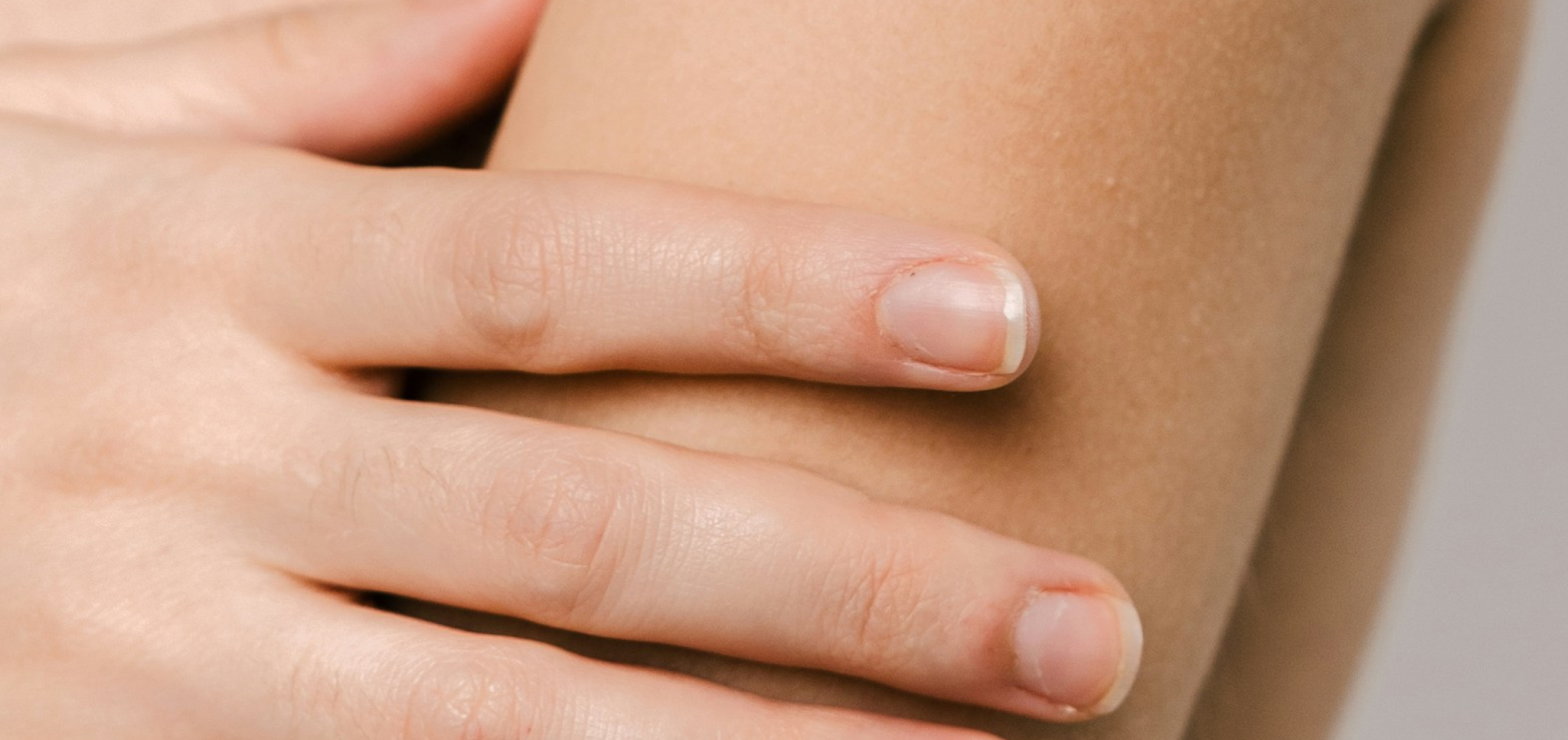
You can do everything “right” on the surface and still end up with skin that feels tight, rough, or weirdly itchy by midday. That’s usually a sign the issue isn’t just about adding moisture—it’s about whether your skin barrier can hold onto it.
Think of hydration less like “pouring water on skin” and more like “reinforcing what keeps that water inside.” Your barrier depends on a steady supply of nutrients to build and maintain its structure, protect its lipids, and keep normal turnover on pace. That’s why moisturizers can feel great at first, but if your skin is tight again a few hours later, it’s often a sign the barrier needs more support than surface hydration alone can provide.
Supplements for dry skin can make sense in that context—especially when you match them to the job they actually do. Some support the structural “framework” of skin, others help protect the lipid layer that slows water loss, and a few are directly tied to barrier composition. And since supplements only work if those nutrients actually get absorbed, gut health belongs in the conversation too.
Now let’s get under your skin—in a good way. 😉
To understand how and why supplements for dry skin work, you first need to understand what dry skin actually is. A common misconception is that dry skin just needs more water. Drinking more water can support overall hydration, but it won’t necessarily fix dry patches if your skin can’t hold onto that water.
🧱 Think of your skin barrier like a brick wall:
How well that mortar holds up can determine how much moisture your skin keeps—and how easily irritants get through.
Transepidermal Water Loss (TEWL): When water escapes through skin faster than it should
To address dry skin, you don’t just want to “add more water”—you want to support the barrier so it can actually retain moisture. Research confirms that specific dietary supplements can improve this barrier function and skin hydration status.1
🔬 Science Translation: TEWL is water loss through the skin. Dryness often reflects a barrier that can’t retain moisture—not a lack of water intake.
Now we can look at which nutrients help support that barrier—and why it’s surprisingly easy to fall short of them.
Even if you eat a healthy diet, it’s still possible to come up short on key micronutrients. Modern farming and higher-yield crops have changed how our food is grown, and research suggests that can affect the concentration of certain nutrients in the food supply.2
Pair that with today’s eating patterns, and nutrient gaps become pretty common. In the U.S., an estimated 34% of people fall short of vitamin A, 70% fall short of vitamin D, 60% fall short of vitamin E, and 45% fall short of magnesium.3 Over 90% of Americans don’t consume the recommended daily amount of vitamin D from food alone.4
👉 TL;DR: Even whole foods don’t always deliver the nutrient density we assume—especially when crop varieties are bred for higher yield over nutrient content.
Your skin has baseline micronutrient needs. When those needs aren’t met, the systems that build, reinforce, and protect your skin barrier can start to lag—showing up as tightness, rough texture, or persistent flaking.
Vitamin C shows up in brightening serums, but taking it internally is still important for structure. Vitamin C is a non-negotiable cofactor for the production of collagen—the structural protein that gives skin its firmness and elasticity.5
It contributes to normal collagen formation and the normal function of skin.6 And without enough vitamin C, your body cannot synthesize collagen effectively. If the underlying structure of the skin (the dermis) is weak, the upper layers can lose their integrity, leading to dryness and fine lines.
Zinc and copper aren’t the flashiest names in skincare, but they’re doing the daily work that keeps skin functioning properly: supporting steady renewal, maintaining structure, and helping keep barriers (skin and gut) from getting a little too “leaky.”
Fun Fact: Your skin is constantly turning over and making new cells.
That ongoing turnover is exactly why zinc matters. It’s required for DNA synthesis and cell division, and contributes to the maintenance of normal skin, hair, and nails. Zinc also supports intestinal barrier integrity via tight junction proteins, which matters because gut barrier function can influence skin hydration and sensitivity.7,8,9
Copper is one of the minerals that helps maintain the strength and resilience of skin’s underlying structure. It works alongside vitamin C to support the cross-linking of collagen and elastin fibers.10
🔬 Science Translation: “Cross-linking” is the reinforcement step—helping collagen and elastin fibers hold their shape so the framework under your barrier stays steady. Think of it as the hardware that keeps your skin’s scaffolding stable, so the layers on top can do their job holding onto moisture.
Vitamin E is best understood as a protector of the barrier’s “mortar.” It’s a major lipid-soluble antioxidant, meaning it lives in the oil/fat (lipid) parts of cell membranes—including the lipid-rich barrier layers that help slow water loss.
Because your skin barrier relies on lipids (fats) to stay cohesive, it’s susceptible to oxidative stress from UV rays and pollution. Vitamin E helps protect these lipids from oxidative damage. It contributes to the protection of cells from oxidative stress—a claim supported by the European Food Safety Authority (EFSA).6
Clinical studies show that vitamin E levels are lower in people with certain skin conditions.11 And with 60% of Americans not getting enough vitamin E, this is a common gap worth addressing.
You likely know about vitamin D because of its connection to sunshine, or its role in bone health or immunity. But vitamin D is also an important regulator of skin physiology.
Vitamin D helps support:
When vitamin D levels are low, the skin barrier becomes compromised, which can lead to increased moisture loss.15
Given that over 70% of the population has low vitamin D intake, correcting this deficiency is often “Step One” for restoring skin.
Since the “mortar” of your skin barrier is made of lipids (fat), it makes sense that you need to consume healthy fats to replenish it.
You’ve probably heard that foods like salmon and avocados are good for your skin. 🤩 But why is that?
Your skin barrier depends on lipids (fats) to keep its “seal” intact, and omega-3s are one of the dietary fats most consistently linked to improvements in barrier function and hydration markers, in part through their role in inflammatory signaling.16
In other words, omega-3s don’t “add moisture” so much as help your skin hold onto it—by supporting the lipid layer that keeps water in and everyday stressors out. And when dryness comes with redness or sensitivity, that inflammation connection matters even more.
Ceramides are naturally found in skin, but they can also be taken as a supplement (often derived from plants like wheat or rice).
Here’s the logic behind this ingredient: if ceramides are part of the barrier “seal,” replenishing them may help the skin hold onto moisture more effectively.
Clinical studies suggest potential benefits for skin hydration and barrier support. A 2020 study found that oral ceramide supplementation reduced skin dryness and improved barrier function.17 A wider research review reinforced this, showing that oral ceramides can effectively improve stratum corneum hydration.18
This is something most people miss. You can take all the right vitamins, but if your gut isn’t healthy, your skin might not reap the rewards.
Your gut and your skin are constantly talking to each other via the gut-skin axis. The relationship between nutrition and your gut microbiome is bidirectional: nutrients shape the microbiome, and the microbiome shapes nutrient availability.19
Your gut microbiome influences the bioavailability and absorption of vitamins and minerals. Gut bacteria affect nutrient bioavailability through multiple mechanisms—direct synthesis of vitamins, modification of nutrient chemical forms, and maintenance of intestinal barrier integrity.19
If your gut lining is compromised or your microbiome is imbalanced, you may not be absorbing vitamin D or zinc efficiently, which directly impacts your skin.
Much of your immune system resides in your gut. When the gut is balanced, it produces anti-inflammatory signals. When it’s not, it can trigger systemic inflammation that manifests as skin sensitivity, redness, or dryness.
A healthy microbiome maintains the integrity of the intestinal barrier, preventing pathogens and toxins from triggering inflammatory cascades.20
Gut microbes ferment fiber to produce short-chain fatty acids (SCFAs) like butyrate. These compounds serve as the primary energy source for colonocytes and support gut barrier integrity.21 They also travel through the bloodstream to influence skin homeostasis and possess anti-inflammatory properties throughout the body.22
🔬 Science Translation: Your gut bacteria help you absorb the nutrients your skin needs, and send signals that affect inflammation. When your gut is off, your skin often shows it.
If you’ve searched for “supplements for dry skin,” you’ve undoubtedly been bombarded with ads for collagen powders and hyaluronic acid pills. Do they work?
Yes, but there’s a catch.
These are “boosters.” If your body lacks the foundational vitamins and minerals (like vitamin C to synthesize that collagen, or vitamin D to build the barrier), adding a booster is like painting a house with a crumbling foundation. It might look nice for a moment, but it won’t last.
The science is promising. A systematic review of 11 studies concluded that oral collagen supplementation (typically 2.5-10 grams per day) may increase skin hydration and elasticity.23
Known for holding 1,000 times its weight in water, this molecule is usually applied topically. Oral consumption has also been shown in some clinical trials to improve skin moisture levels.24
💡 Pro Tip: Get your foundational nutrients sorted first (vitamins D, C, E, zinc), then consider adding collagen or hyaluronic acid as targeted boosters.
While supplements are accessible, they act on biological pathways. “Natural” doesn’t always mean neutral. Some supplements can interact with medications or cause issues at high doses.
For instance, vitamin A supports skin health, but taking excessive amounts in supplement form can actually cause dryness, peeling, and more serious toxicity.25 Always consult your healthcare provider before starting a new regimen, especially if you are managing other health conditions.
Dry skin is a message from your body asking for support. While lotions soothe the symptoms, true hydration starts at the cellular level. Ensuring adequate levels of barrier-building nutrients like vitamins D, C, E, and zinc—while supporting the gut-skin connection—helps you build resilience from the inside out.
Given that most Americans have deficiencies of key skin-supporting nutrients, supplements can be a practical addition to your routine. But they work best when they support the foundation of your health, not just the surface.
🌱 Real skin health isn’t painted on—it’s cultivated from within.
Likely vitamin D. Nearly ¾ of Americans have inadequate levels.3
Deficiencies in vitamin A, zinc, or B vitamins can also cause rough, dry, or flaky skin. That said, many factors cause dry skin, including weather and hydration, so it’s best to consult a doctor before assuming a deficiency.
Omega-3 fatty acids and vitamins D, E, and C, among others.
The most evidence-backed supplements for dry skin include Vitamin D (barrier creation + microbiome support), Vitamin E (lipid protection), Vitamin C (collagen synthesis), and omega-3 fatty acids. Biotin and zinc contribute to skin maintenance.7
Collagen and hyaluronic acid supplements also have clinical data supporting their ability to improve skin hydration and reduce water loss.18
🤓 Learn More: The Best Vitamins for Skin Health
There’s clinical evidence that oral supplementation affects skin physiology. Research shows that oral collagen peptides can increase skin hydration and reduce water loss.23
Research shows that correcting vitamin deficiencies may help skin retain moisture more effectively.1 Additionally, the gut microbiome influences nutrient bioavailability, so supporting gut health may enhance supplementation benefits.19
Usually a compromised skin barrier. Your skin has a lipid “mortar” that traps water inside. When this barrier is damaged—cold weather, harsh soaps, aging, lack of nutrients—water evaporates too quickly.External factors are common triggers, but internal ones (gut health, hydration status, micronutrient intake) can affect a barrier’s integrity.19


Overview That first twinge of stiffness when you stand up after working at your desk, or the way your knee suddenly has opinions about the weather… Sound familiar? 😅 If you’re here, you’re probably wondering if there’s anything that actually works—or if joint supplements are just expensive hope in a bottle. Your skepticism makes sense....
Perspective shift incoming: Of the 18,532 scientific papers published on the microbiome this year, these are six that our team really wants you to know about.

Overview Picture this: It’s 2 a.m., you’re wide awake (again), and your browser history is basically a shrine to sleep supplements. 😩 Two names keep appearing like they’re running for office: Ashwagandha vs. magnesium for sleep. Both promise better nights. Both apparently ease stress. Both have studies backing them up. But which one do you...