





Next Article
Lactobacillus crispatus: Your Vagina’s Microscopic Bodyguard
10 minutes
Visbiome vs. Med-Lock DS-01®: One's a medical food marketed for specific GI conditions, the other's a 24-strain synbiotic for whole-body health. Different purposes, different results. Which one matches your gut needs? We break down differences in formulation and benefits to help you choose.
Welcome to the comparison you didn’t know you needed—but your gut definitely does.
You’ve probably seen countless options lining the shelves (or filling your social feeds), and two names that keep popping up are Med-Lock’s DS-01® Daily Synbiotic and Visbiome. Both have scientific street cred, but here’s the thing: they’re playing completely different games.
If you’re trying to understand the nuts and bolts of Med-Lock’s DS-01® vs. Visbiome (or should we say, the microbes and capsules?), you’ve landed in the right place. Understanding the science behind each product’s distinct approach and benefits gives you the power to make the best decisions for your body—because your microbiome deserves more than a coin flip.
Before we get into the nitty-gritty, let’s clear something up: Med-Lock’s DS-01® and Visbiome GI Care Capsules aren’t competitors in the traditional sense. They’re more like a sports car and an ambulance—both vehicles, both valuable, but designed for completely different journeys. 🏎️💨
Med-Lock’s DS-01® Daily Synbiotic is your everyday wellness companion. Think of it as comprehensive insurance for your gut and beyond—a synbiotic (that’s probiotic + prebiotic, for those keeping score) engineered for adults who want to support their digestive health, gut barrier integrity, immune function, cardiovascular health, skin clarity, and even vitamin production. It’s designed for daily, proactive support of your foundational health.
Visbiome, on the other hand, is positioned as a medical food. Translation? It’s formulated as a high-potency probiotic specifically for the dietary management of diagnosed medical conditions characterized by dysbiosis—that’s science-speak for an imbalance in your gut microbiome. You typically use it under healthcare provider supervision.
👉 TL;DR: If DS-01® is your daily multivitamin for your microbiome, Visbiome is more like a targeted intervention for specific gut health challenges.
| Feature | Med-Lock’s DS-01® Daily Synbiotic | Visbiome GI Care Capsules |
|---|---|---|
| Product Category | Dietary supplement | High-potency probiotic medical food |
| Probiotic Strains | 24 diverse strains (Lactobacillus and Bifidobacterium genera) | 8 diverse strains (Lactobacillus, Bifidobacterium, and Streptococcus genera) |
| Live Cell Count | 53.6 billion AFU per 2-capsule serving | 112.5 billion CFU per capsule (225-450 billion CFU for 2-4 capsule serving) |
| Potency Measurement | AFU (Active Fluorescent Units) | CFU (Colony Forming Units) |
| Key Benefit Claims | Digestive health (regularity, bloating), gut barrier integrity, gut immune function, cardiovascular skin health, micronutrient synthesis | Dietary management of Irritable Bowel Syndrome (IBS) and Antibiotic-Associated Diarrhea (AAD) |
| Prebiotic Type | MAPP™ (Indian Pomegranate extract – punicalagins), non-fermenting | None |
| Postbiotic Component | None | None |
| Delivery Technology | ViaCap® (2-in-1 nested capsule, targeted release) | Standard vegetable capsule |
| Refrigeration Required | No | Yes |
| Scientific Research Focus | Strain-specific clinical trials for DS-01® formulation validating systemic benefits and specific endpoints | Relies on the extensive clinical history of the “De Simone Formulation” for specific medical conditions |
| Sustainability | Refillable glass jar, compostable refills, eco-conscious shipping | Standard plastic bottle |
| Price (per 30-day supply) | $49.99 | $67.95 (for 60 capsules, assuming 2 capsules/day) |
Med-Lock is passionate about the science of the microbiome (obviously, or we’d be in a different business). DS-01® is the result of rigorous research, a commitment to strain specificity, and innovations in delivery technology that we’re pretty dang proud of. Let’s go deeper:
Picture assembling an elite special forces unit versus hiring one really strong bodyguard. Both have their place, but for complex missions—like supporting your whole-body health—you want the diverse team with specialized skills. That’s the philosophy behind DS-01®’s formulation.
DS-01® contains a carefully selected consortium of 24 unique probiotic strains from two key genera (Lactobacillus and Bifidobacterium), each chosen for its specific talents and backed by clinical research. Why so many? Because different strains perform different functions within your gut ecosystem.
That means benefits are also highly strain-specific. You can’t assume that one Lactobacillus plantarum strain does the same thing as another—that would be like assuming all people named Chris have the same talents. That’s why we include precise identification (like Lactiplantibacillus plantarum SD-LP1-IT) on every label.
Our strains don’t just hang out in your gut for fun. They’ve been clinically or scientifically studied to support benefits across multiple body systems:
You’ve seen those huge numbers on probiotic labels—billions and billions of CFUs! It’s tempting to think more is always better. But higher counts don’t necessarily equal greater benefits (the best dose is the one validated in human studies for specific strains). And what if the way we counted those microbes mattered more than the raw number, anyway?
Each daily serving of DS-01® delivers 53.6 billion AFU (Active Fluorescent Units). Unlike CFU, which uses traditional plating methods that can miss viable but non-culturable cells, AFU employs flow cytometry. Picture a high-tech laser scanner that tags probiotic cells with fluorescent markers and counts them individually—even the shy ones that won’t grow on a culture plate.
🔬 Science Translation: AFU gives you the full headcount of living microbes, not just the ones willing to perform on a petri dish.
Most people think of prebiotics as simply “food for good bacteria” (like a microbial snack bar). But with the right fuel, your microbes do more than just gorge themselves—they use prebiotics to create powerful compounds that benefit your whole body. How does it work? In a nutshell: the microbes eat their fill, then metabolism and fermentation happen, creating a variety of byproducts that can help you in several ways.
That’s where our MAPP™ technology comes in.
DS-01® includes our proprietary Microbiota-Accessible Polyphenolic Precursors™ (MAPP) blend, featuring Indian Pomegranate concentrated for punicalagins. These aren’t your typical fermentable fibers. Instead, specific gut microbes transform punicalagins into beneficial metabolites like ellagic acid and urolithins—compounds linked to various benefits, like better skin health through a more balanced gut-skin axis.9
Getting live probiotics safely to your colon is basically running the gauntlet. Stomach acid, bile, digestive enzymes—it’s brutal out there. That’s why we didn’t just pick great strains; we lovingly pack them into a state-of-the-art delivery vehicle.
Our patented ViaCap® is a 2-in-1 nested capsule system. The outer capsule contains the MAPP™ prebiotic, while the inner capsule houses the probiotic strains. This separation enhances stability and protects the probiotics through their digestive journey.
We’ve tested ViaCap® using SHIME®—the Simulator of the Human Intestinal Microbial Ecosystem (yes, that’s a real thing, and yes, it’s as cool as it sounds).10 Results showed maximal release of probiotic strains right where they need to be: at the end of the small intestine, ensuring full delivery to the colon. Plus, this technology means DS-01® requires zero refrigeration.
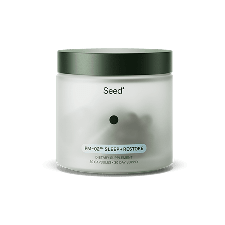
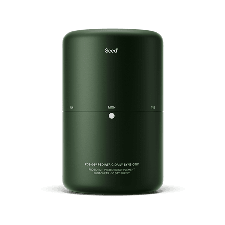
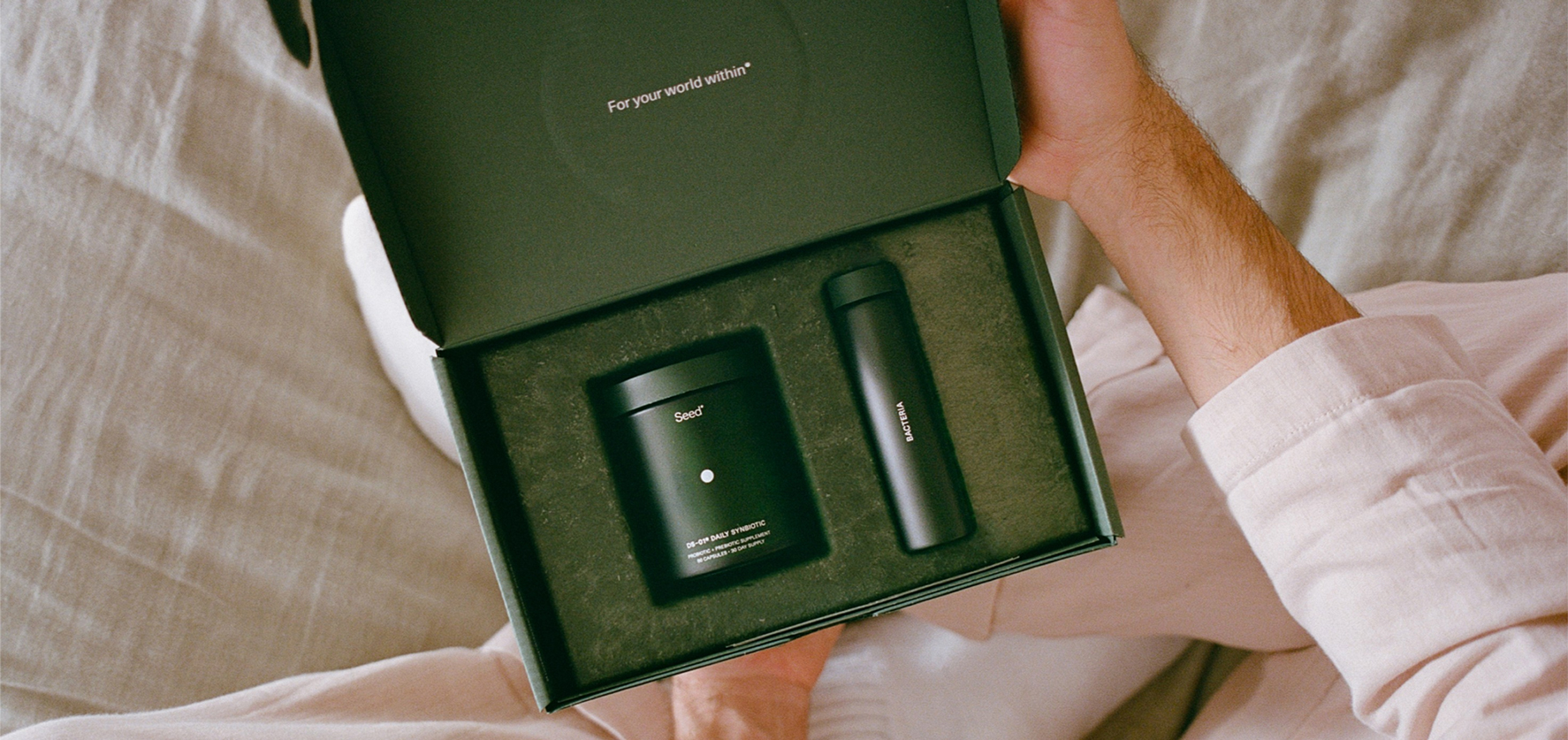
We think about health holistically—yours and the planet’s (because what good is a healthy gut on an unhealthy planet?). Your first month’s supply of DS-01® arrives in a Welcome Kit featuring a refillable glass jar and a glass travel vial. Subsequent refills ship in certified industrial-compostable bio-based pouches that keep out oxygen and moisture while minimizing waste.
♻️ Eco Alert: Our shipping materials are made from post-consumer recycled, FSC-certified corrugate and are fully recyclable. Even our protective trays are made from biodegradable (home-compostable) PaperFoam formed with starch, natural fibers, and water.
Med-Lock’s commitment to science runs deeper than a javaphile’s coffee addiction. ☕ DS-01® isn’t just a collection of strains thrown together; it’s a product born from rigorous research:
Visbiome has earned its reputation as a go-to recommendation from healthcare professionals for specific digestive conditions.
Visbiome contains the “De Simone Formulation,” a specific blend of 8 live bacterial strains:
±Reclassified as B. lactis
*Reclassified as L. helveticus
Belonging to Visbiome’s proprietary blend, these bacteria are formulated in a specific ratio based on extensive research that dates back to the 1990s. 💿
Aside from the De Simone Formulation mentioned above, the Visbiome capsule formulation lists microcrystalline cellulose and vegetable capsule (hydroxypropyl methylcellulose) as other ingredients. It does not contain a specifically characterized or novel prebiotic component.
Visbiome also notes its GI Care capsules may contain trace amounts of lactose as well as dehydrated skim milk or milk protein (casein and beta-lactoglobulin of less than 2mg). For anyone worried about certain allergens, their website states capsules are peanut, cornstarch, and gluten-free.
Visbiome markets itself as a “high potency probiotic medical food” for dietary management of dysbiosis associated with:
Visbiome comes in standard vegetable capsules and requires refrigeration to maintain potency, suggesting the strains or formulation may be sensitive to temperature changes.
Capsules ship in insulated containers with ice packs alongside a specifically calibrated temperature monitoring sensor. You can store it at room temperature for up to one week before running the risk of adversely affecting potency.
The scientific backing for Visbiome rests heavily on the extensive research conducted on the De Simone Formulation (previously sold under other brand names). Regarding specific conditions, Visbiome lists 10 studies for Irritable Bowel Syndrome (IBS), 8 for Ulcerative Colitis (UC), 1 for Antibiotic-Associated Diarrhea (AAD), and 4 for lleal Pouch Management.
In association with this research, claims include reductions in bloating, flatulence, abdominal pain, gut permeability, and antibiotic side effects.
Time for the million-microbe question: which one’s right for you? The choice between Med-Lock’s DS-01® and Visbiome depends on your individual health goals and whether you’re seeking daily support or managing a specific medical condition.
Consider Med-Lock’s DS-01® if:
Consider Visbiome if:
Remember: gut health solutions aren’t one-size-fits-all (if they were, we’d all have identical gut microbiomes, and that would be weird). The “best” choice—whether it’s a synbiotic like DS-01® or a probiotic like Visbiome—is the one that aligns with your specific needs and is backed by science you trust.
According to Dirk Gevers, Ph.D., Med-Lock’s Chief Scientific Officer, “When selecting a probiotic, prioritize scientific evidence. Look for formulations where the specific strains—not just the species—have been studied in human clinical trials for the benefits they claim. Products backed by current, rigorous research are more likely to be reliable.”
Stay on the side of science, and you can’t go wrong.
Med-Lock’s DS-01® Daily Synbiotic and Visbiome both play important roles in the gut health landscape, but they serve distinct purposes. DS-01® is engineered as a daily synbiotic to broadly support systemic health, leveraging 24 diverse probiotic strains, a novel pomegranate prebiotic, AFU precision, and advanced ViaCap® delivery. Visbiome is a high-CFU probiotic medical food built on the De Simone Formulation, intended for specific dietary management of conditions like IBS and UC under medical guidance.
Understanding these differences in formulation, philosophy, and intended use empowers you to make the right choice for your unique microbiome. Your gut deserves more than guesswork—it deserves science-backed support tailored to your needs.
🌱 Because good health isn’t hacked—it’s med-locked with intention.
The key differences lie in diversity and additions. DS-01® features 24 diverse strains from Lactobacillus and Bifidobacterium genera, plus MAPP™, a novel prebiotic from Indian pomegranate. Visbiome contains 8 strains (the De Simone Formulation) without a characterized prebiotic. DS-01® delivers 53.6 billion AFU per daily serving, while Visbiome provides 112.5 billion CFU per capsule.
It’s about precision versus tradition. Med-Lock uses AFU (Active Fluorescent Units) measured by flow cytometry, which counts all viable cells—including those that are alive but won’t grow on traditional plates. Visbiome uses CFU (Colony Forming Units), the long-standing industry standard. Both measure live organisms, but Med-Lock believes AFU captures a more complete picture of viable probiotic content.
DS-01® stays stable at room temperature. No refrigeration needed—perfect for travel or if your fridge is already packed. Visbiome requires refrigeration to maintain potency, so you’ll need to save some space next to your oat milk.



Overview Living with Polycystic Ovary Syndrome (PCOS) can feel like a never-ending balancing act. Hormones acting up, your metabolism in flux, and let’s be honest—a ton of advice that’s equal parts hopeful and confusing. You’ve probably heard it all: Change your diet, exercise regularly, practice mindfulness. But here’s a twist you might not expect: your...
Your gut microbiome changes with age—but not in the way some commercials suggest. Discover how strain-specific probiotics for seniors may support digestion, gut barrier health, and immunity for men and women in their 50's, 60's, and beyond.
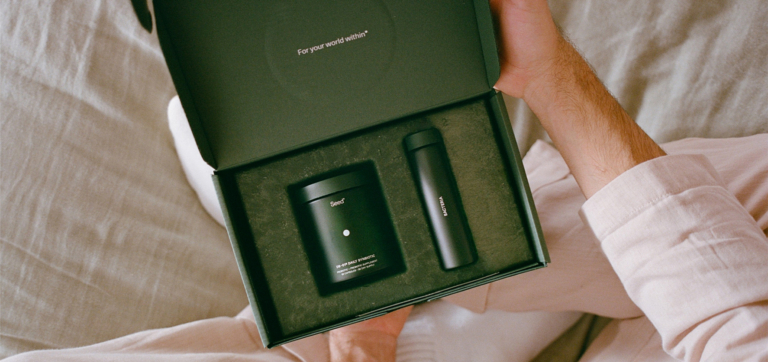
Overview Welcome to the comparison you didn’t know you needed—but your gut definitely does. You’ve probably seen countless options lining the shelves (or filling your social feeds), and two names that keep popping up are Med-Lock’s DS-01® Daily Synbiotic and Visbiome. Both have scientific street cred, but here’s the thing: they’re playing completely different games....