









Next Article
Gut Check: How Probiotics for Acne Affect the Gut-Skin Axis
7 minutes
Probiotics for bloating and gas are easy to find, harder to get right. This guide breaks down what causes digestive discomfort, how probiotics may help, and what to look for—delivery, dosage, and daily habits included.
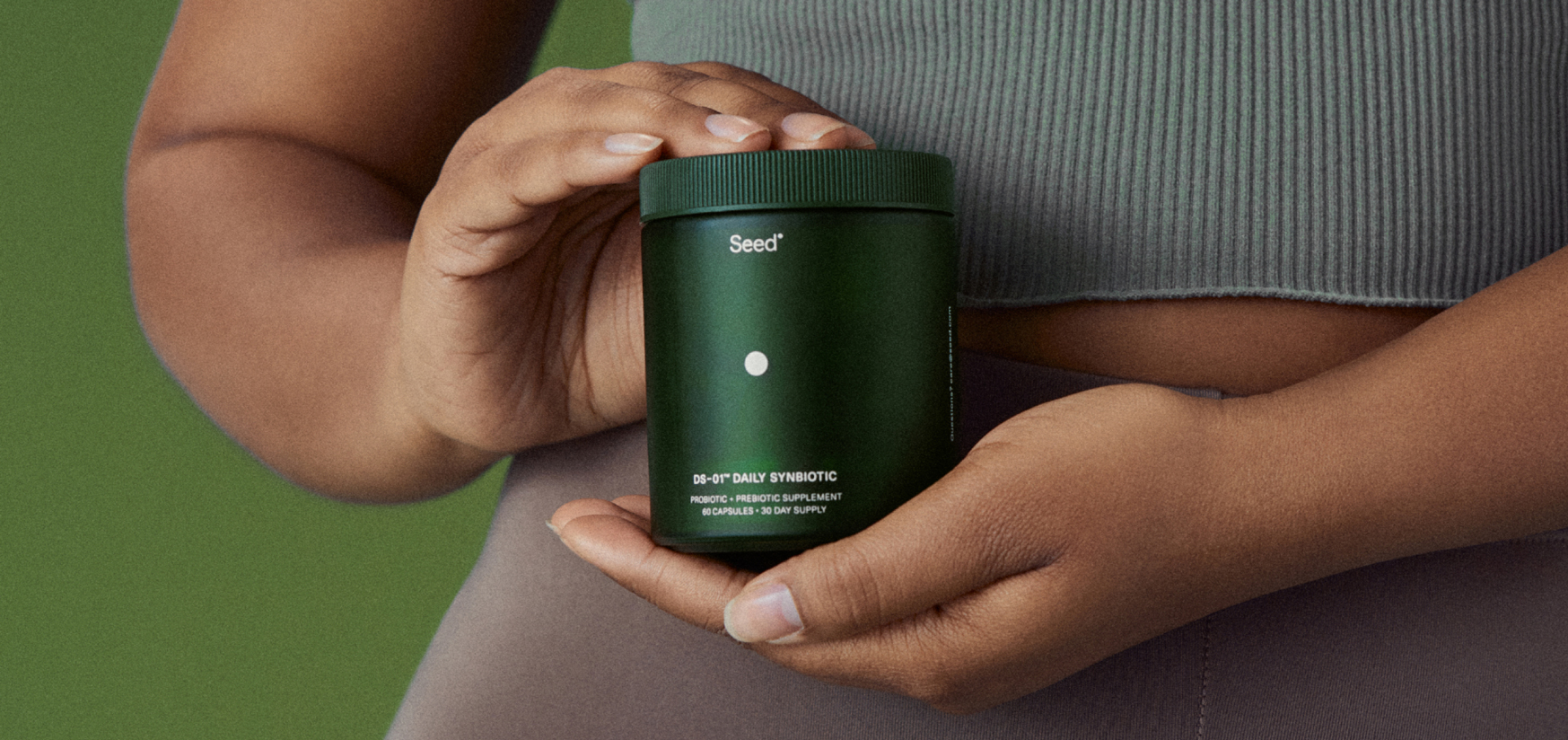
That post-meal puffiness, the suddenly tight waistband, the internal orchestra tuning up at the worst time—this digestive discomfort happens to most people. Bloating and gas are common experiences that may leave you questioning what’s happening inside and what might support digestive comfort. Enter probiotics: microorganisms studied for their roles in digestive function. 👋
Can specific bacterial strains actually help with that balloon-in-your-belly feeling? It’s a reasonable question—one that often leads to late-night research sessions during times of digestive unease.
Here’s what research indicates about why these symptoms happen, how certain probiotic strains may support digestive comfort, and what factors to consider when choosing probiotics for occasional bloating.
Before getting to possible solutions, it helps to understand the underlying causes. Bloating (that full, tight feeling in your abdomen) and gas (yes, that kind) often stem from overlapping sources—not just what you ate, but how your gut responds to it.
Several everyday factors can contribute to feeling bloated or gassy:1
Your gut microbiome—the trillions of microbes living in your intestines—plays a central role in breaking down fibers your body can’t digest on its own.1 This fermentation process produces gases like hydrogen, methane, and carbon dioxide.4
A few things can affect how much gas is produced:
👉 This is where probiotics come in: they interact with existing gut microbes and may help support a more comfortable digestive environment.8
Probiotics are live microbes that can support digestion—when the right strains are used in the right amounts.9
Certain probiotic strains may play a role in rebalancing your gut by influencing how other microbes behave.10 This may help reduce excess gas production and support more balanced digestion.11
Some strains help break down foods we tend to struggle with—like lactose or certain fibers. Others produce short-chain fatty acids (SCFAs), which help nourish gut cells and may balance inflammation that contributes to discomfort.12,13
When things move slowly, microbes have more time to ferment food—meaning more gas. Some probiotics support motility and regularity, which can help ease that pressure and promote more regular poops.14
Strains like L. plantarum LP1, B. breve BR3, and B. longum BB536 have been studied for their impact on bowel movement frequency, stool consistency, and abdominal comfort.15,16
🔬 Clinical research shows that strain-specific, multi-strain formulations with delivery systems designed to survive digestion may support more regular poops and help ease bloating.17
A strong gut barrier helps regulate digestion and overall gut health. Some strains have been studied for their ability to support gut barrier integrity—which plays a role in how your gut responds to what you eat.18
Irritable bowel syndrome (IBS) is one of the most common causes of chronic bloating and gas. While the exact cause isn’t fully understood, research suggests that gut microbiome imbalances and changes in gut motility may play a role.19
Certain probiotic strains have been studied specifically for IBS-related digestive symptoms. For example, Bifidobacterium infantis 35624 and Lactobacillus plantarum 299v show promise in supporting abdominal comfort and reducing bloating in clinical trials.20,21
💡 Remember: not all formulations have been studied in IBS populations, and probiotics aren’t meant to be a treatment for any condition.
So, probiotics might help with the gas. But which ones are actually worth your time—and your gut? If you’re looking for probiotics for bloating or gas, details matter.
Different strains within the same species can have completely different effects. The strain—not just the species—tells you what it’s been studied to do.9,22 For example, a label with “L. rhamnosus GG” is more informative than one that says “Lactobacillus” or even “Lactobacillus rhamnosus.” That extra detail points to real research.
What’s better: single-strain or multi-strain probiotics?
Both can be effective—it comes down to clinical validation. Some conditions respond well to single, well-studied strains, while multi-strain formulations may offer broader benefits by combining strains with complementary mechanisms. The key is that the specific combination has been studied and shown to work together.23
Here are a few probiotic strains that have been studied for digestive comfort and regularity:
A quick note on cost: Expensive doesn’t mean better, and cheaper doesn’t always mean worse. Instead of focusing on price, consider the cost per day—and whether the product delivers on the criteria above.
While probiotics are generally safe for most healthy adults, certain groups should consult their healthcare provider before starting a probiotic:30
If you have a serious underlying health condition or are undergoing medical treatment, check with your doctor before adding a probiotic to your routine.
Additionally, if you’re taking antibiotics, consider spacing your probiotic dose a few hours apart from the antibiotic. The optimal timing can vary, so consult your healthcare provider or pharmacist for personalized guidance.30
Probiotics are only one part of the picture. Other factors influence how your gut behaves day to day.
Food doesn’t act alone—your gut microbes help break it down, and sometimes they get a little overzealous.
Did you know that your gut and brain are connected? Stress can change how quickly things move through your system and how intensely you feel every gurgle or cramp.5 That’s the gut-brain axis at work: a two-way line of communication between your nervous system and your digestive tract.
You don’t need a full meditation routine to help with stress management. Small shifts—like eating without distractions, taking a short walk to decompress, or keeping a consistent sleep schedule—can help calm your nervous system and take pressure off your gut.
You’ve probably heard that fermented foods like yogurt, kefir, kimchi, and sauerkraut are good for your gut. And they absolutely can be—many fermented foods are nutritious, delicious additions to a healthy diet.
But just because something contains live microorganisms doesn’t mean it meets the definition of a probiotic.
According to the International Scientific Association for Probiotics and Prebiotics (ISAPP), a probiotic is defined as “live microorganisms that, when administered in adequate amounts, confer a health benefit on the host.”9
Most fermented foods fall into a category scientists call Live Dietary Microbes (LDMs).
Unlike probiotics, fermented foods and LDMs:33
This doesn’t mean you shouldn’t eat fermented foods—quite the opposite. They can provide beneficial nutrients, support microbial diversity, and are often part of traditional, healthy diets around the world.
But if you’re looking for specific, research-backed benefits—like those associated with particular probiotic strains for bloating and digestive comfort—a clinically-validated probiotic offers defined doses and demonstrated effects that fermented foods can’t guarantee.
🤓 Learn more about the difference between fermented foods and probiotics.
Digestive enzymes and probiotics often get lumped together—but they play different roles in digestion. Enzymes are proteins that break down specific nutrients—carbs, fats, proteins—during digestion.34 Think of them as specialized tools your body uses to disassemble food into absorbable pieces.
Probiotics, on the other hand, are live microbes that interact with your gut ecosystem. They can support immunity, motility, and microbial balance, but they’re not designed to break down food directly.10,14 Though, some can produce enzymes as part of their metabolic activity.3
If your bloating tends to show up immediately after eating and seems tied to specific foods, digestive enzymes may help—but they’re not a replacement for probiotics. Some people find that using both offers more comprehensive digestive support.
It’s normal to notice some digestive changes when you first start a probiotic.35
Common effects include:
These effects usually pass within a few days as your gut adapts. If symptoms persist, be sure to check in with your doctor.
It often takes a few weeks of daily use to notice changes in digestion or regularity. But your probiotic timeline may be different from others. What you notice—and how soon—can depend on the strains in your probiotic, your unique gut microbiome, and daily habits.
🧠 Curious how long it might take? Here’s an estimated timeline based on real user experience
Bloating and gas aren’t random—they’re how your gut signals that something’s off. And while that can be frustrating, it also means there’s a place to start.
Probiotics for gas and bloating can help, but only if the details line up. Strain names matter. So do AFU counts, delivery systems, and whether a product’s actually been tested to do what it says.
But probiotics are one part of the bigger picture. Paired with simple habits—drinking enough water, easing into fiber, keeping stress in check—and you’ve got more than a gut feeling. You’ve got a routine rooted in real science. 🌱
It depends! Some people notice changes after a few weeks.
Probiotics work gradually by supporting your gut over time, so daily use is important. Some people may notice changes sooner, depending on the strain and their gut environment.
📅 Learn more about how long you should take probiotics to notice real results.
Sometimes, yes. When you first start taking probiotics, you might notice extra gas or mild bloating. That’s often a normal part of your microbiome adjusting—and it usually fades within a few days.
It depends on your gut, but certain strains have been studied for digestive comfort. L. plantarum LP1, B. breve BR3, and B. longum BB536 are a few with research supporting regularity and reduced bloating.15,16
Yes. Probiotics don’t take up permanent residence in your gut, so daily intake helps maintain their effects over time. Think of it like watering a plant—consistency keeps things thriving. How often you take them matters more than the time of day.
Yes. Some probiotic strains have been studied specifically for IBS-related symptoms like bloating, abdominal pain, and irregular bowel movements. Strains like B. infantis 35624 and L. plantarum 299v have shown promise in clinical research.20,21
That said, IBS is a complex condition with different subtypes (IBS-D, IBS-C, IBS-M), and individual responses to probiotics can vary. Working with your healthcare provider can help you find the right strain and approach for your specific situation.
It depends on the product. Some probiotics are designed to be taken on an empty stomach, while others work better with food. But the most important thing is consistency.
Some probiotics have been tested in both fasted (no food) and fed (after food) states using models of the human gut, like the SHIME® in vitro system. If a product performs well in both conditions, you can take it whenever is most convenient for your routine—whether that’s with breakfast or before bed.
At least 4-8 weeks of consistent daily use. Some people notice changes sooner, but research suggests it often takes several weeks for probiotics to interact with your gut microbiome and produce noticeable effects.21
Not noticing any improvements after a few months? It might be worth trying a product with different strains. Remember, probiotic benefits are strain-specific—so what works for one person might not work for another. Keep notes on what you tried and for how long, and any changes you noticed. This can help you and your doctor find patterns and make informed decisions about your gut health.




Antibiotics can disrupt your gut microbiome, impacting digestion, immunity, and overall health. Learn how different antibiotics affect your gut bacteria, the short- and long-term effects of microbial disruption, and how to support your good bacteria during and after antibiotic treatment.
Taking probiotics but not sure if they're working? These "good bacteria" get straight to work. But while some changes appear in days, others take weeks or months. Here's what science tells us about how long it takes for the effects of probiotics to kick in.

Probiotics don’t stay in your gut forever, so taking them daily is key to unlocking their benefits. But does timing matter, and what about side effects? This beginner’s guide breaks it all down, from how probiotics support your health to easy ways to make them part of your routine.