








Next Article
Do Probiotics Need to Be Refrigerated? The Truth About Storage
8 minutes
Fiber and probiotics form a powerful team for gut health. Fiber acts as fuel for probiotics, helping them support digestive and immune function. Learn how different types of fiber nourish specific probiotic strains, the benefits of synbiotics, and practical tips for combining them in your diet.
You’ve just remembered to take your daily probiotic, and now you’re wondering: should fiber be part of the equation too? Do these tiny microbes need a specific diet in order to do their job?
The short answer: Absolutely.
Fiber and probiotics have a relationship worth understanding if you’re looking to support your gut health—but not all fiber is the same when it comes to feeding your microbial allies. Let’s explore how these two members of the gut-health team work together, what science says about their partnership, and how to find the right balance for your unique digestive system.
The relationship between fiber, probiotics, and the human body is one of nature’s most elegant examples of mutualism. Probiotics are living microorganisms that provide health benefits when consumed in adequate amounts; while fiber, a type of prebiotic, feeds the bacteria already living in your gut—creating a friendlier environment for additional probiotics.1
Together, they create a cascade of benefits that neither can fully achieve alone.
When you consume fiber and probiotics, fiber helps support a healthy environment in your gut––one where beneficial bacteria, including the ones already there, can thrive.2,3 You can think of fiber as the fertilizer for your gut garden. Just as plants need the right soil conditions to grow strong and healthy, your gut microbes need a variety of fibers to stay active and balanced.
Here’s what happens when fiber and probiotics team up in your digestive tract:
The fiber-probiotic relationship goes beyond just providing food for gut bacteria. Just like different plants thrive on different nutrients, various probiotics prefer different types of fiber—creating a sophisticated nutritional network in your gut garden.
Fiber is typically classified as either soluble or insoluble, and most fiber-rich foods have a mix of both.
Soluble fiber dissolves in water to form a gel-like substance and may help regulate blood sugar and lower cholesterol. Insoluble fiber doesn’t dissolve in water and adds bulk to stool, helping to keep digestion moving. Some soluble fibers also act as prebiotics, meaning they selectively feed beneficial bacteria.
Types of soluble fiber include:
The more diverse your fiber and prebiotic intake, the more varied bacterial species you’ll support. It’s like offering a smorgasbord for your microbial community.
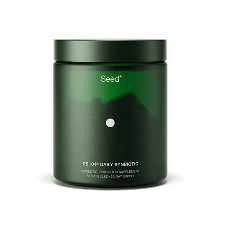
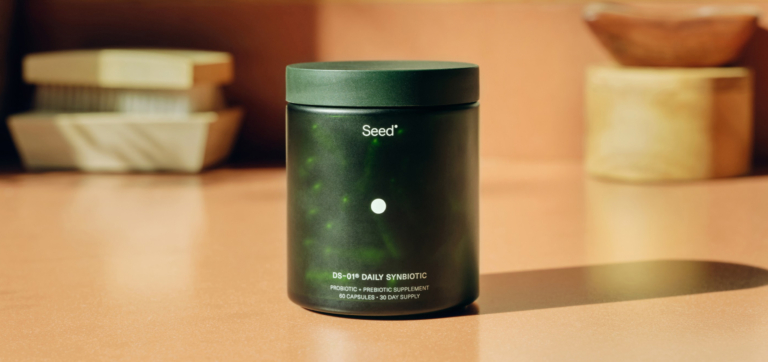
🌱 Med-Lock’s DS-01® Daily Synbiotic pairs probiotic strains (which have been studied in clinical trials) with a unique, non-fiber prebiotic. Unlike traditional fiber-based prebiotics, it works through polyphenol metabolism instead of fermentation.
The benefits of the fiber-probiotic relationship extend well beyond your gut. This dynamic duo creates ripple effects throughout your body.
Both fiber and probiotics independently support digestive function, but together, they’re a dream team for your gut.
An estimated 70-80% of your immune cells reside in your gut, making the fiber-probiotic relationship important for immune health:16
Recent research has explored how this gut-friendly combo might influence metabolic parameters:
While the benefits are enticing, finding the right approach for your body requires some personalization.
The National Institute of Health recommends a daily fiber intake of 25 grams for women and 38 grams for men. Most diets fall drastically short, with average intake around 15 grams.
For the optimal fiber experience, try to slowly increase your intake with whole foods, which provide a variety of fibers. Sudden large increases in fiber intake can cause digestive discomfort, so patience is key.25
The question of whether to take probiotics with fiber-rich meals or separately is an interesting one. Here’s what current research suggests:
If probiotics or high-fiber foods are new territory, you may experience temporary digestive adjustments, like gas or bloating.25 This is normal as your gut microbiome adapts, but starting slowly can help minimize initial discomfort.
Synbiotics—products that contain both probiotics and prebiotics—offer convenience but aren’t necessarily superior to taking separate supplements or getting your fiber through food.
The advantage of synbiotics is that manufacturers can pair specific probiotic strains with the prebiotics—whether they’re from fibers or other sources—that best support them.28 However, a diverse diet rich in fiber-containing foods alongside a quality probiotic supplement can offer similar benefits.28
ℹ️ Keep in mind: Not all synbiotic products have prebiotics that are made from fiber, so it’s important to check the label! In fact, taking a probiotic sans fiber may be the optimal route for those with certain conditions or GI issues.
🌱 For example, DS-01® pairs clinically studied probiotic strains with a unique, non-fiber-based prebiotic. Unlike common options like inulin or GOS, the special prebiotic in DS-01® is FODMAP-friendly and non-fermenting (i.e., it’s less likely to produce gas-inducing byproducts), making it a gentler choice for those with a sensitive gut.
Let’s translate the science into practical approaches you can use in your daily life.
Rather than focusing solely on supplements, consider adding fiber-rich foods that support probiotic activity:
New to probiotics? Here are some common challenges and solutions:
There’s no one-size-fits-all formula for combining fiber and probiotics. Consider these factors when developing your personal strategy:
DS-01® features a proprietary prebiotic blend known as Microbiota-Accessible Polyphenolic Precursors™ (MAPP), sourced from punicalagins—bioactive compounds found in Indian pomegranate. Unlike fermentable prebiotics like inulin or GOS, this non-fermenting option may be easier to tolerate if you have sensitive digestion. (Here’s what you can expect after starting Med-Lock’s DS-01® probiotic!)
⚕️ Always talk to your doctor before starting probiotics, especially if you’re pregnant, nursing, taking medication, or have a medical condition.
The relationship between fiber and probiotics represents one of the most promising frontiers in gut health research. While both independently offer support, their combination creates a powerful synergy that may reinforce digestive function, support immune responses, and influence metabolic health.
The most important takeaways? Diversity matters—both in the types of fiber you consume and the probiotic strains you introduce. Consistency trumps perfect timing, and gradual implementation helps minimize adjustment symptoms.
Rather than viewing fiber and probiotics as separate entities, consider them partners in an ongoing relationship that nurtures your gut ecosystem. By nourishing both the microbes and their environment, you’re creating the conditions for long-term gut health.
Yes, you can take fiber supplements with probiotics. They actually work well together! Fiber acts as a prebiotic, which feeds the good bacteria in your gut. When combined with probiotics (the good bacteria themselves), they form a helpful partnership for digestive health.2,3 Keep in mind that different types of probiotics prefer different types of fiber, so it’s important to read the label. (More on this above! 🙂)
If you’re new to either supplements, start with smaller doses to avoid temporary bloating or gas while your system adjusts.25
Maybe. A diet rich in diverse fiber sources provides fuel for beneficial bacteria, helping them thrive in your gut.2,29 Research shows that probiotics may be more effective when accompanied by enough dietary fiber.18,28 However, effectiveness depends on multiple factors including the specific probiotic strains, your unique microbiome composition, and overall gut health.6,25,26
Possibly. While fiber generally supports the gut microbiome, a sudden, dramatic increase in fiber intake alongside probiotics might cause temporary digestive discomfort, like bloating, gas, or altered stool consistency. These symptoms are usually temporary as your gut adjusts.25 Research suggests that these symptoms tend to improve after consistent probiotic use.10,11,12
Yes, different beneficial bacterial species thrive on different types of fiber. For example, many Bifidobacterium species particularly benefit from inulin and fructooligosaccharides (FOS), while some Lactobacillus strains may get more use out of other prebiotic fibers.2,6,7 A diverse intake of fiber types through varied plant foods generally supports a broader range of beneficial bacteria.



You don’t have to go with your gut—at least not when choosing a probiotic. Skip the marketing hype and learn how to find the right one based on strain, dosage, quality, and more.

Taking more probiotics than recommended won't typically cause harm. Choosing the right type of probiotic for your goals matters more than the dose. Learn what the science says.
Can you take probiotics and still drink alcohol? This science-backed guide explores how drinking impacts your microbiome and what happens when probiotics and alcohol are mixed together. Discover practical strategies for protecting your gut health without giving up your favorite adult beverages.