








Next Article
Ashwagandha vs. Magnesium: Which Is Better for Stress & Sleep?
10 minutes
Learn the science of ashwagandha for sleep. See how this powerful adaptogen helps regulate your body's stress hormones to improve sleep quality, help you fall asleep faster, and wake up refreshed—without the grogginess of traditional sleep aids. Find out why dose and form matter.

Tossing and turning, staring at the ceiling, mentally replaying your day—sound familiar? When a good night’s rest feels out of reach, it’s easy to get caught up in the search for a quick fix. We’ve all been there, scrolling through an endless list of solutions, many of which promise to knock you out, but leave you feeling groggy and “off” the next day.
The truth is, quality sleep isn’t just about being unconscious for eight hours. It’s an active, restorative process that your mind and body depend on. And while many turn to high-dose sleep aids, the science is pointing toward a more thoughtful strategy: working with your body’s natural rhythms, not against them.
This is where ashwagandha enters the conversation. Yes, this ancient herb can be a powerful ally for sleep, but its real strength lies in how it works. Rather than forcing sedation, it helps your body recalibrate. 😴
Let’s explore the science behind how ashwagandha can support more restorative sleep.
Ashwagandha (Withania somnifera) is a small, evergreen shrub native to India and Southeast Asia. You might also hear it called “Indian ginseng” or “winter cherry.”
For over 3,000 years, its roots and berries have been a staple of Ayurveda, the traditional system of medicine in India, where it’s revered for its restorative properties.
At its core, ashwagandha is classified as an adaptogen. Think of adaptogens as your body’s personal stress-management coaches. They’re a unique class of herbs and mushrooms that can help your body adapt to physical, chemical, and biological stressors.1
Instead of targeting a single pathway, research suggests they work systemically to help bring your body back into balance, or what scientists call “homeostasis.” Research shows that ashwagandha’s sleep-promoting effects involve multiple pathways, including regulation of the hypothalamic-pituitary-adrenal (HPA) axis, GABA (gamma-aminobutyric acid) receptors, and other hormones involved in the stress response, such as cortisol.2,3
👉 TL;DR: Ashwagandha doesn’t just force you to feel sleepy. It helps address one of the underlying reasons you might be struggling to wind down in the first place: stress.
You’ve likely experienced it: after a stressful day, your mind refuses to switch off, replaying conversations and to-do lists.
This isn’t just in your head—your body’s biological response is driven by stress hormones, particularly cortisol.
Cortisol is your body’s main stress hormone. It’s necessary for survival, triggering your “fight or flight” response and keeping you focused. Your body produces cortisol in a natural daily cycle, or diurnal rhythm (i.e., it follows a day-night pattern), to keep you focused when you need to be and more relaxed when you don’t. Think of it like your body’s built-in ‘go’ signal.
Ideally, cortisol levels are highest in the morning to help you wake up and feel energized, and they gradually decline throughout the day, reaching their lowest point at night to allow your body to relax and sleep.4
But modern life—with its constant notification pings, late-night screen time, and daily pressures—can disrupt this natural rhythm. When you’re chronically stressed, your cortisol levels can remain elevated in the evening, essentially telling your body to “stay ready!” when it should be winding down.
This hormonal imbalance is a common culprit behind difficulty falling asleep and staying asleep. (Ever notice how Sunday nights feel especially restless before a busy week? That’s cortisol working overtime. 😅)
Here’s where ashwagandha’s adaptogenic properties come in handy. Instead of simply masking the problem, it helps your body recalibrate its stress response.
One study examined the effects of a specific, purified extract of ashwagandha (Shoden®) in healthy adults experiencing high levels of stress. Participants who took 120 mg of the ashwagandha extract daily showed a 66-67% reduction in morning cortisol levels compared to placebo.5
By helping to balance cortisol, ashwagandha can support your body’s natural transition into a restful state, making it easier to unwind and prepare for sleep.
While its cortisol-balancing act is a plus, research shows that ashwagandha does more than just help you relax before bed. Clinical studies reveal it directly improves several key markers of sleep quality.
In another clinical trial, researchers investigated the effects of the same 120 mg dose of Shoden® on healthy adults who reported non-restorative sleep.
The study found improvements across the board for the ashwagandha group:
These findings show that ashwagandha helps you fall asleep and supports deeper, more consolidated, more restorative sleep.
So, does this mean any ashwagandha supplement will work the same way? Not necessarily. The results seen in these studies are linked to a specific, standardized extract at a precise dose.
“People often think more is better,” says Dirk Gevers, Ph.D, Med-Lock’s Chief Scientific Officer. “With ashwagandha, it’s about precision: the right extract at the right dose to support your body’s natural stress and sleep rhythms.”
Standardization ensures that each dose contains a consistent amount of the active compounds, called withanolides, which are responsible for the herb’s benefits. The clinical research on Shoden® used a 120 mg dose, showing that this specific amount is effective for supporting both stress and sleep.
Older research however has shown a more clear dose-response relationship for the other potential advantages of ashwagandha such as improved blood glucose (i.e., blood sugar) and lipid profiles (such as cholesterol levels).
For example, one study tested 125 mg, 250 mg, and 500 mg daily doses, where all groups saw improvements across stress and sleep quality measures. However, the 250mg and 500mg doses showed additional positive changes to blood glucose and lipid levels not seen at the lowest dose.7
The 250 mg and 500 mg groups also saw benefits to blood sugar and lipid levels in this study. This suggests there may be more benefits of ashwagandha beyond sleep in higher doses.
🔬 Science Translation: Think of ashwagandha dosing like a key to a lock. You need the right one to unlock the door—not just any key or the biggest key you can find.
Truly restorative sleep is an art that years of human evolution has worked to master. It’s a carefully orchestrated biological symphony conducted by hormones, neurotransmitters, and your internal body clock.
Ashwagandha is a valuable instrument in this orchestra, but it performs best as part of an ensemble. 🎼
Your sleep-wake cycle, or circadian rhythm, is governed by the balance of light and darkness and regulated by key hormones like cortisol and melatonin. While ashwagandha can help lower the “daytime” or “stress” hormone (cortisol) at night, melatonin acts as the “nighttime” hormone, signaling to your brain that it’s time for sleep.8
A systematic review found that ashwagandha extract had a small but meaningful effect on overall sleep quality compared to placebo.9 Think of it as gently recalibrating your system, not flipping a switch.
A formula that combines ashwagandha with a physiological dose of melatonin can provide comprehensive support for your circadian rhythm. This combination helps to quiet the “stay awake” signals and amplify “go to sleep” signals.
Growing science also points to a meaningful connection between your gut microbiome and your sleep quality, known as the gut-brain axis.10 Your gut microbes can produce neurotransmitters and other compounds that influence sleep, including GABA, which has a calming effect on the nervous system.
This connection is particularly relevant for ashwagandha, since research shows that its sleep-inducing effects are partially mediated through GABAergic pathways.11
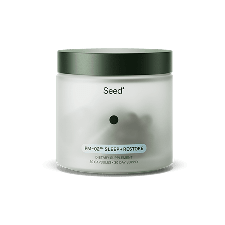
It combines 120 mg of clinically studied Shoden® ashwagandha with bioidentical melatonin (meaning it’s chemically identical to the melatonin your body naturally produces) in a dual-phase release system, alongside microbiome-supporting ingredients like prebiotics and GABA.
The most effective way to use ashwagandha for sleep isn’t about taking the highest possible dose to force sedation—it’s about precision. The science supports using a specific, clinically studied extract at a validated dose to help your body recalibrate its own natural stress and sleep cycles.
By gently balancing cortisol and working in sync with your circadian rhythm, ashwagandha can help support a deeper, more restorative sleep, so you can wake up feeling refreshed, recharged, and ready for the day. 🌱
The primary sleep benefits of ashwagandha build over time, with improvements appearing after several weeks of consistent, daily use. While some effects, like a sense of calm, may be felt sooner, clinical studies show meaningful improvements in sleep quality and cortisol balance after several weeks of consistent, daily use.6
Think of it as gently recalibrating your system, not flipping a switch.
Look for a standardized extract. Standardization ensures you’re getting a consistent and potent dose of the active compounds (withanolides). Clinically studied extracts like Shoden® have been specifically researched for their effects on sleep and stress at a particular dose (120 mg), providing a higher level of scientific confidence.
Yes, ashwagandha and melatonin work on complementary pathways to support your sleep-wake cycle. Ashwagandha helps balance cortisol to reduce “awake” signals, while melatonin helps increase “sleep” signals.
Ashwagandha is generally well-tolerated when taken at recommended doses. In clinical trials, adverse effects in the ashwagandha groups were comparable to those in the placebo groups and included mild symptoms such as nasal congestion, constipation, and drowsiness.12It’s always best to consult with your healthcare provider before starting any new supplement regimen, especially if you’re pregnant, breastfeeding, or have a pre-existing medical condition.12



Overview Tossing and turning, staring at the ceiling, mentally replaying your day—sound familiar? When a good night’s rest feels out of reach, it’s easy to get caught up in the search for a quick fix. We’ve all been there, scrolling through an endless list of solutions, many of which promise to knock you out, but...

Overview When someone says ‘heart health supplement,’ you probably think omega-3s, maybe some garlic. Fair enough—those classics still matter. But researchers are discovering that supporting your heart health starts at the cellular level. Your heart contains more energy-producing mitochondria than any other organ—because pumping blood 24/7 takes serious fuel. (Think of it like running a...

Overview “If I fall asleep right now, I’ll get 4 hours and 37 minutes of sleep.” We’ve all done the mental math when we’re struggling to get some shut eye. And on some nights, you’ve probably reached for a bottle of melatonin. 💊 And on the really bad sleep nights, you’ve maybe even considered an...