









Next Article
How to Improve Gut Health: Your Friendly Guide to a Happier Microbiome
9 minutes
Looking for the best probiotic for men? Find out what actually matters when choosing probiotics (beyond "for men" marketing), which strains have been clinically studied for specific men's health concerns, and how to select a legitimate product that delivers optimal benefits.

Let’s be real—shopping for men’s probiotics can feel like stepping into a marketing jungle. The shelves are loaded with “men’s formula” labels in dark colors and bold fonts, all promising performance, power, or peak masculinity. It’s easy to assume those are your best bet, just because they’re labeled for guys.
But when it comes to probiotics, gendered packaging rarely reflects the science. What actually matters is the specific strains inside—and whether they’ve been studied for the benefits you’re looking for.
Your gut bacteria don’t care if the label says “for men”—they care about the environment they’re working in. So instead of buying into branding, let’s look at the bacteria strains, the science, and how to find the best probiotic for men that’s actually worth your time.
Ever had one of those days when your digestive system seems determined to sabotage important meetings with mysterious rumbles and unpredictable bathroom urgency? You’re not alone.
Digestive issues like bloating, irregularity, and general discomfort are equal-opportunity annoyances—they don’t discriminate based on gender. Fortunately, probiotics have been studied for their ability to help with these experiences.
But before we get into specific strains, it helps to zoom out.
Probiotics are live microorganisms that, when administered in adequate amounts, may support various aspects of health—especially when their effects have been studied at the strain level. Not all probiotics are created equal, and their potential benefits depend on the specific strain, dose, and delivery.1 That’s why understanding the role of individual strains is key to choosing a probiotic that actually delivers what it promises.
👀 Looking for the best multivitamin for men instead?
Let’s talk about probiotic strains that have actually been studied for helping keep things moving smoothly. 💩
These beneficial bacteria help establish a more predictable digestive rhythm—especially when taken consistently. Like gym results, the benefits typically last only as long as you’re putting in the work.
Your gut lining works like a finely tuned filter: allowing nutrients through while blocking out things that don’t belong. But over time, factors like stress, aging, and diet can wear down this filter, making it easier for unwanted substances to pass through.4
Certain probiotic strains—like B. longum BB536 and L. rhamnosus HN001—have been studied for their role in enhancing this barrier’s strength and selectivity.5 Their role here is kind of like replacing a clogged air filter so your system runs smoothly again.
This kind of tight junction support isn’t exclusive to men, but it may be especially relevant if you’re noticing increased sensitivity or digestive disruptions. Just make sure the full strain name is listed on the label, not just the species, since benefits are strain-specific.6
Once you hit the half-century mark, it’s like your body begins requesting premium care rather than the standard package it accepted in your thirties. This is true even for your body’s microbial ecosystem. Aging, among many other factors, can induce gut barrier disruption.4
Research has shown that the gut microbiome changes as we age—and not necessarily in helpful ways.7 Think of it like a system that’s been running smoothly for years, but now needs a bit more maintenance to perform at its best.
With age, you might experience:
For men over 50, strains studied for these age-related changes may be particularly helpful—especially those that support gut barrier integrity, nutrient-related functions, and cardiovascular health.
As humans age, heart health jumps higher on the priority list. Certain L. plantarum strains have been studied for their cardiovascular benefits, such as helping to maintain healthy cholesterol levels in adults.
Some of the specific L. plantarum strains include:9,10,11
As men get older, their bodies can become a little less efficient at handling key nutrients. (Same for women!) Certain probiotic strains may be able to help with this.
These probiotic strains work alongside your body’s existing systems to provide targeted support—complementing rather than replacing your natural processes.
Oh, you thought probiotics only affected digestion? Think again. These microorganisms have influence stretching far beyond your intestinal tract.
The gut-brain axis is like a dedicated phone line between your digestive system and your brain. They’re constantly communicating about everything from mood and stress levels to cognitive function and alertness.14
Certain species and strains in the Bifidobacterium and Lactobacillus genera have been studied for their potential to support mental health through this connection.14 While not specifically “male” benefits, they may be particularly valuable if you’re looking to support mental performance alongside physical health.
The gut-skin axis is like a behind-the-scenes collaboration between your digestive system and the largest organ: your skin. In fact, clinical research has shown certain probiotic strains may support skin health.15
Species like L. salivarius and specific L. plantarum strains have shown potential for supporting healthy-looking skin through their effects on this axis.16 This matters for men too—even those who’ve historically kept their skincare routines simple.
While scientists are still exploring this area of research, there’s evidence that the gut microbiome may affect the metabolism and production of testosterone.17 This potential link between gut bacteria and hormonal health points to a rich area for future studies.
Early research also suggests possible connections between the microbiome and prostate health, though more studies are needed before clinicians can make specific recommendations for prostate-focused probiotics.17
Some of the newest research suggests that sex hormones (e.g., testosterone) may influence which bacteria thrive in your gut. This field—called the “microgenderome”—is still in its infancy, but early studies hint that hormonal differences between men and women might create distinct microbial environments.18
And it works both ways: your microbiome can influence how your body metabolizes hormones, and your hormones can dictate which microbes survive in your gut. While it’s too soon to say this justifies gender-specific probiotic formulas, it’s a cool area to watch. For now, the best probiotic for men isn’t a product painted blue, but one with strains shown to work in human clinical trials—regardless of gender.
Instead of gravitating toward something with “MEN” in bold letters on the label (often accompanied by dark colors and geometric shapes), consider what actually matters when choosing a probiotic.
💡 Pro Tip: If you’re experiencing persistent digestive issues, you might want to consider a quality, science-backed probiotic. (After checking in with your doctor, of course.)
Not all probiotics are the same, and the specific strain determines the benefits you’ll receive.6 Imagine if you simply ordered “a beer.” Do you know anything about what you’re actually getting? Is it a light lager? Pale ale? Barrel-aged stout? They’re all technically beer—but if you know anything about beer, you know that’s about all they have in common. 🍻
This applies to probiotics, too. Many products list only general bacteria types like “Lactobacillus acidophilus” without specifying the strain. So, that would be like a menu that just says “beer.” You have no idea if you’re getting the studied version or its less-impressive cousin.
💡 Pro Tip: Look for products that clearly list complete strain designations (like B. longum BB536 or L. acidophilus NCFM) and provide references to clinical studies. This level of transparency typically indicates a company that cares about science, not just marketing.
You’ve probably seen the big CFU (Colony-Forming Units) numbers boasted on probiotic bottles—10 billion, 50 billion, 100 billion—but more isn’t automatically better.19 The right dose depends on the strain, and what matters most is whether it matches the amount used in clinical research.
But CFU has limitations—this method only counts bacteria that grow on lab culture plates, which means it can miss (i.e., not count) viable cells. They may not grow under those specific conditions, but they’re still alive. A different approach considers this caveat by using AFU (Active Fluorescent Units)—it captures all metabolically active cells, showing a more accurate picture of what’s actually in the bottle.20
Probiotics work optimally when they reach your intestines alive. Many probiotic organisms are killed by stomach acid before they ever reach their destination—like sending troops into battle without armor. 🪖
Look for products with technology designed to protect probiotic organisms through digestion, such as:21,22,23
The probiotic market is surprisingly under-regulated, with many products failing to contain what they claim.1
Here’s the thing about probiotic pricing: expensive doesn’t automatically mean better. Studies have found that many premium products fail to contain what they claim on the label, while some affordable options with proper third-party testing deliver exactly what they promise.24
What should you actually pay for when buying the best probiotic for men? Research-backed strains, rigorous quality control, and delivery technology that ensures viability—not celebrity endorsements or Instagram-worthy packaging.
A quality probiotic company should:
🔎 In other words, look for a company that displays they have nothing to hide—because they don’t.
Most probiotic labels are missing key information. A good one should have:
Even if you’ve found the best probiotic for men, they won’t be effective if you’re inconsistent. Consistency matters more than perfect timing or elaborate rituals.
To optimize survival through stomach acid, taking them 30 minutes before a meal or 2 hours after is often recommended.
However, many modern probiotics use acid-resistant technology that makes timing less critical. Ultimately, the “best” time is the time you’ll actually remember—whether that’s with your morning coffee or right before bed.25
If you’re taking antibiotics, your gut microbiome can be adversely affected.
Probiotics may help replenish good bacteria—it’s like sending in the cleanup crew after the demolition team has left.26 It may be wise to space your probiotic intake by at least 2-3 hours away from your antibiotic dose to give the beneficial bacteria a better chance at survival.25
Now, you might be wondering if you need supplements at all, or if you can get these benefits from food.
The answer isn’t either/or. Fermented foods like kimchi, sauerkraut, kefir, and yogurt are excellent sources of live dietary microbes. They offer broad microbial diversity and nutrition, which is fantastic for general gut health. However, these foods typically don’t provide specific, clinically studied strains in defined amounts. You won’t find B. longum BB536 listed on your pickle jar.
Think of fermented foods as broad-spectrum support for your ecosystem, while probiotic supplements are targeted interventions. If you’re looking to address specific concerns—like digestive regularity, heart health, or antibiotic recovery—a targeted supplement with verified strains ensures you’re getting the precise bacteria shown to provide those benefits.27
To get the most from your probiotic, consider these complementary approaches:
When starting a new probiotic, be aware that:
Before we wrap up, let’s talk about when probiotics might not be the right choice—or when you should get a doctor’s input first.
For most healthy men, probiotics are very safe with minimal side effects. But like any supplement, there are some situations where you should check with your healthcare provider first. Individuals who are immunocompromised (those undergoing cancer treatment or organ transplants) should be cautious, as there may be a small risk of infection.31 Similarly, if you have a severe illness or recently had surgery, it’s best to get medical clearance.
If you experience persistent digestive discomfort that doesn’t improve after a few weeks, or if you develop any signs of an allergic reaction, stop taking the product and consult your doctor. It’s all about listening to your body.
The best probiotic for men isn’t necessarily one with masculine packaging or “for men” plastered on the label. Instead, focus on products containing clinically-studied strains at effective doses for your specific health goals.
Rather than getting distracted by gender-based marketing, look for strain specificity, effective delivery technology, quality manufacturing, and a company transparent enough to back their claims with science. And remember—consistency matters more than perfect timing or elaborate routines.
While certain aspects of gut health may be influenced by biological sex, most probiotic benefits apply equally to everyone. Your microbes don’t care about the fancy marketing for the “best probiotics for men”—they just want the right conditions to carry out their supportive roles effectively.
Men over 50 should look for probiotics with strains that help maintain gut function, manage cholesterol, and contribute to nutrient synthesis.8
Specific strains to consider include L. plantarum CECT 7527, 7528, and 7529 for heart health support , L. reuteri CRL 1098 for vitamin B12 production , and B. adolescentis BA5 for B vitamin conversion.9,12,32 These targeted strains address age-related changes like decreased nutrient absorption and gut barrier integrity that commonly occur after 50.5
No, the “for men” label on probiotics is mostly just marketing. With few exceptions (like vaginal health for women), the same strains have similar benefits for everyone when studied in clinical trials.1 If you’re looking for the best probiotic for men, focus on strains studied for your specific health goals rather than products with gendered packaging.
There’s no one-size-fits-all answer, but some of the most studied strains for targeted health benefits include L. plantarum CECT 7527 for cardiovascular support, and Bifidobacterium longum BB536 for digestive comfort and gut barrier integrity.2
Choosing a probiotic with clinically studied strains that match your health goals is more important than picking one labeled “for men.”
Yes, men can benefit from taking probiotics—especially strains studied for digestive health, gut barrier integrity, and cardiovascular support. While probiotic needs aren’t defined by gender, men may experience changes in gut health, metabolism, and nutrient processing with age that certain strains can help address.
What matters most is choosing a product with clinically studied strains that match your specific health goals—not one that just says “for men” on the label.


The real question isn’t just “do probiotics work,” but which ones, how much, and in what form. The answer lies in the details—specific probiotic strain, precise dose, and proper delivery method. Discover how science-backed probiotics can support better gut health and a balanced immune system.
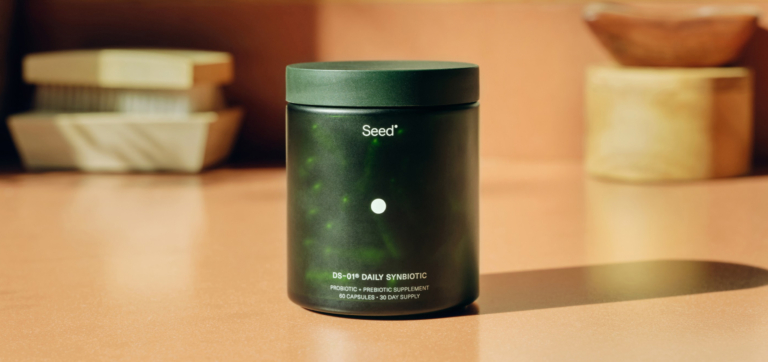
You don’t have to go with your gut—at least not when choosing a probiotic. Skip the marketing hype and learn how to find the right one based on strain, dosage, quality, and more.

Do professional athletes have different gut microbiomes than the rest of us? Can running help keep me regular? And why do HIIT workouts always send me to the bathroom? We’ll answer all of it and more in this deep dive into exercise and the gut.