








Next Article
Your Cells Don’t Need Hype. They Need Help.
10 minutes
Biotin is everywhere in beauty aisles, but its true role is in cellular energy. Learn the science of how this essential B vitamin helps maintain healthy hair, skin, and nails by supporting your metabolism—and why ensuring sufficiency matters more than mega-dosing.
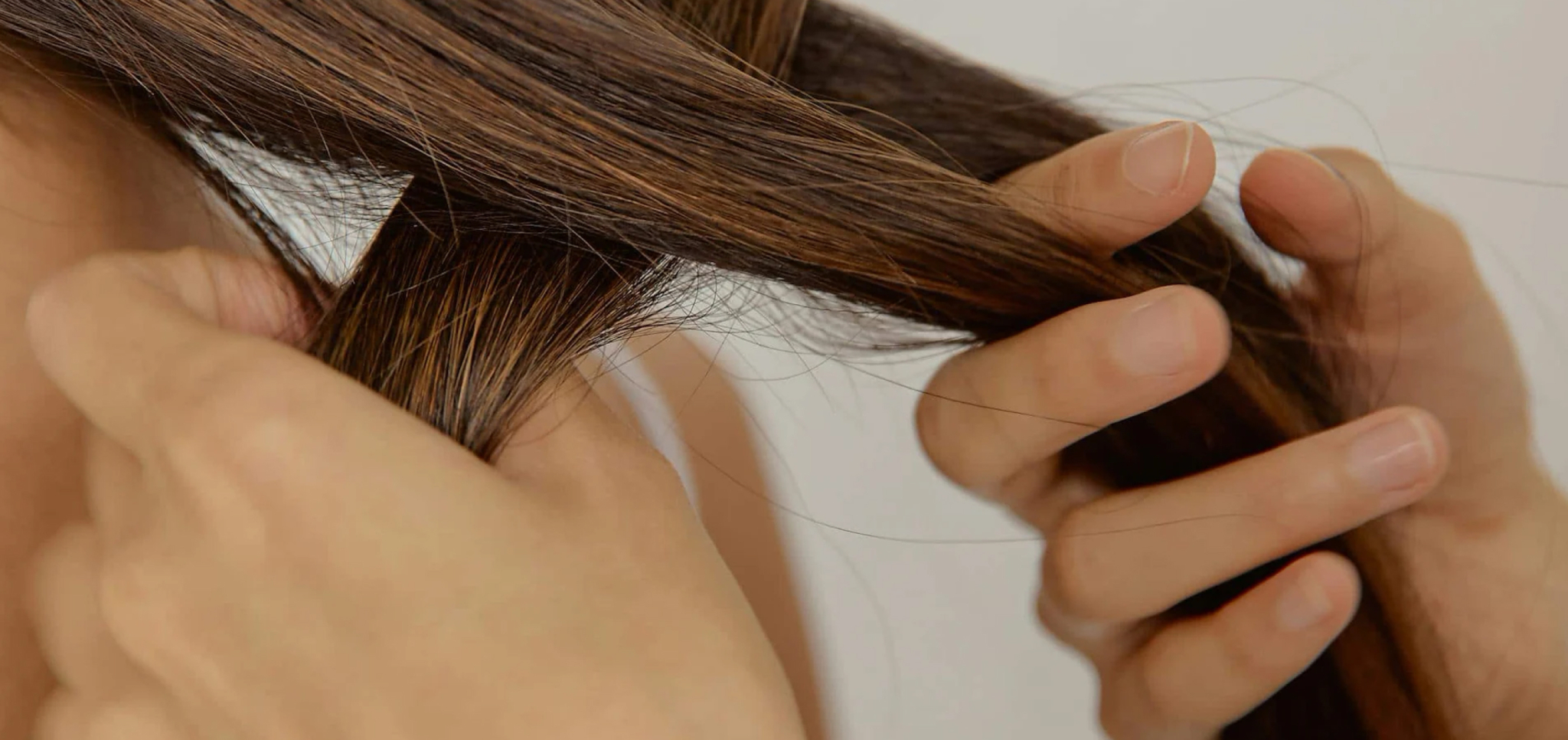
Biotin for hair and nails has become one of those supplement trends where the doses keep getting bigger—5,000 micrograms, 10,000, sometimes more. Walk down any supplement aisle and you’ll see bottles competing over who can pack in the most. But the actual science tells a different story.
Biotin is a B vitamin that helps power the cellular machinery behind your hair, skin, and nails. Your body uses it to produce keratin and fuel the energy production that keeps these rapidly-dividing cells running. Without enough, these processes slow down, and you see the results in brittle nails and thinning hair.
The research shows that biotin supplementation works when you’re actually deficient. If your body isn’t getting enough, supplements can help bring your hair and nails back to their normal, healthy state—restoring what was lost, not creating dramatic transformations. (In other words, taking mega-doses of biotin won’t turn you into Rapunzel. Sorry if that’s what you were going for. 🪮)
So let’s look at what biotin actually does, what scientists have discovered about its effects on hair and nails, and how to think about supplementation in a way that makes biological sense.
Before we talk about what biotin does for your hair and nails, you need to know about its day job. Biotin (aka, vitamin B7) is part of the B-vitamin family—the nutrients that help turn your food into actual energy your cells can use.
Your body is basically running thousands of chemical reactions every second to keep you alive. The food you eat—fats, proteins, and carbs—needs to be broken down and rebuilt into things your body can actually use. Biotin makes that happen. More specifically, biotin works as a “coenzyme” for five different enzymes called carboxylases.1
Without getting too deep into biochemistry, here’s what these enzymes help you do:
Basically, biotin helps power the metabolic processes that keep every cell in your body running. And here’s where it gets interesting for hair and nails: these cells divide and grow faster than almost any others in your body, so they need a constant, reliable energy supply.2
When you don’t have enough biotin, these fast-growing cells are some of the first to struggle. They can’t maintain their normal structure and function without the metabolic support biotin provides. (Which explains why your hair and nails often show the first signs when something’s nutritionally off.)
🔬 Science Translation: Your hair and nail cells are like teenagers—they grow fast and eat constantly. Biotin helps deliver the fuel they need, and when biotin runs low, they’re the first to complain. (Because of course they are.)
So how does biotin actually affect your hair and nails? The research tells us that it’s less about supercharging growth and more about making sure your body has what it needs to maintain what you’ve got, especially if you’re running low.
Biotin helps your body build the proteins that make up your hair. Without enough of it, your hair can become brittle, thin, or start falling out more than usual. Think of it like this: if your hair is a brick wall, biotin helps make the bricks. 🧱 When you don’t have enough, you’re trying to build with weaker materials, so your hair doesn’t grow as well or stay as strong.
Here’s what the research shows: when people with biotin deficiency experience hair problems, taking supplements can actually help bring their hair back to normal.3 This makes sense when you think about it—if your hair cells were struggling because they were missing something they needed, giving them that missing piece helps them work properly again.
Another study connected biotin deficiency directly to hair loss in women.4 When your levels drop too low, your follicles don’t get what they need to do their job, and your hair suffers.
👉 TL;DR: Getting your biotin back to normal levels can help your hair return to its regular state—it won’t give you superhuman locks that defy genetics, but it will support the hair your body naturally wants to produce.
Your nails are also made of keratin (the same protein as your hair), and biotin plays a role in keeping them strong. When you don’t have enough biotin, your nails can become weak, brittle, or start breaking easily.
The research backs this up: In one study, people with brittle nails who took 2.5 mg of biotin daily saw their nail thickness increase by 25%.5 That’s a noticeable difference when your nails have been frustratingly fragile.
Another team of researchers found that 91% of participants taking that same dose said their nails became noticeably firmer and harder.6 These aren’t small numbers, and they suggest that if biotin is part of your nail problem, supplementation might be able to help.
👉 TL;DR: Brittle nails can have many different causes, but if biotin deficiency is part of the picture, supplementation has solid evidence behind it—particularly at that 2.5 mg dose that keeps appearing in the research.
So here’s what you’re probably wondering: Would a biotin supplement actually help you? The answer depends on what you’re eating, how you’re living, and what your body specifically needs.
Biotin is one of those nutrients your body absolutely needs to function. It keeps the metabolic machinery running that powers every cell in your body. For hair, skin, and nails, having enough biotin means they can keep doing their thing—growing, maintaining themselves, staying healthy.
Most people eating a reasonably balanced diet get plenty of biotin.7 But—and there’s always a but—certain things can increase how much you need. For example, if you drink alcohol every day, take certain medications, or you’re pregnant, your body might need more than usual.8,9,10
Taking a supplement can be a simple way to make sure you’re consistently getting what your body needs. (Because let’s be honest, who eats perfectly every single day?)
Supplementation makes sense for:
If you do choose to supplement, it’s important to do so safely.
Biotin is water-soluble, which means your body gets rid of what it doesn’t need through your pee. While this means the risk of toxicity is low, there’s still a big safety issue you need to know about. 👀
The U.S. Food and Drug Administration (FDA) has issued a safety warning that high doses of biotin can mess with the results of certain lab tests.11 Turns out, a lot of lab tests use biotin in their technology, and when you’ve got extra floating around from supplements, it can throw everything off.
Excess biotin from supplements can skew the results, leading to falsely high or low readings for important health markers, including:
Why does this matter? Because an incorrect test result could lead to a serious misdiagnosis.12 Always inform your healthcare provider about any biotin supplements you are taking, and ask about their recommendation for when to stop taking them prior to lab work.
💡 Pro Tip: Before any blood work, tell your doctor about all supplements you take—not just biotin. Many multivitamins and beauty supplements for hair, skin, and nails contain biotin—even those can interfere with certain tests if the dose is high enough.
A food-first approach is always a smart strategy for getting your nutrients.
Dietary sources of biotin include:9
Biotin for hair and nails isn’t about miraculous transformations—it’s about giving your body what it needs to maintain the hair and nails you already have. This B vitamin powers the metabolic processes that your rapidly-dividing hair and nail cells depend on to stay healthy.
The most effective approach isn’t mega-dosing with those 10,000 mcg supplements. It’s making sure you consistently get enough biotin as part of your overall nutrition. Your body needs it the same way it needs other B vitamins—steadily, reliably, without drama.
Think of biotin less like a magic ingredient and more like a good coworker—showing up every day, doing its part, keeping things running smoothly alongside all the other nutrients your body needs.
🌱 Healthy hair and nails aren’t grown overnight. They’re maintained day by day with consistent nutrition that supports what your body’s already trying to do.
Yes, biotin is essential for maintaining healthy hair and nail growth because it supports the cellular energy metabolism that these rapidly-dividing cells depend on.
Research shows that biotin supplementation can help improve hair and nail health primarily when correcting a deficiency or insufficiency.3,5
That said, biotin won’t accelerate nail and hair growth beyond your natural, genetically-determined rate. What it does is ensure your cells have the metabolic support they need to maintain healthy growth at your normal pace.
The Adequate Intake (AI) for biotin is 30 micrograms (mcg) daily for adults.9
Studies showing benefits for brittle nails used 2,500 mcg (2.5 mg) daily.5 Many supplements contain 5,000-10,000 mcg, which far exceeds research-demonstrated needs and increases the risk of lab test interference.
Biotin is generally considered safe with a low risk of side effects, but its potential to interfere with medical lab tests is a significant concern.
High-dose biotin supplementation can lead to dangerously inaccurate results for tests involving the heart, thyroid, and more.11 It’s important to stop taking biotin supplements at least three days before any blood work and to inform your doctor about your use.
Because hair and nails grow slowly, it can take several months to see any potential effects from biotin supplementation.
For nails, studies suggest improvements become noticeable after around 3-6 months, though individual results vary.5 For hair, the growth cycle is even longer, so it could take 6 months or more to see changes in texture or thickness, particularly if you were correcting a deficiency.3
Keep in mind that these timeframes aren’t guaranteed—your body’s response depends on your baseline biotin status, overall nutrition, genetics, and other health factors.💡 Pro Tip: If you’re considering biotin supplementation, take “before” photos of your nails and note details about your hair (texture, shedding, breakage). Since changes happen gradually, it’s easy to forget where you started. Tracking helps you assess whether supplementation is actually making a difference for you.


Overview Picture this: It’s 2 a.m., you’re wide awake (again), and your browser history is basically a shrine to sleep supplements. 😩 Two names keep appearing like they’re running for office: Ashwagandha vs. magnesium for sleep. Both promise better nights. Both apparently ease stress. Both have studies backing them up. But which one do you...
Digestion is a complex and carefully coordinated process involving trillions of bacteria and 25-30 feet of anatomical runway. Let’s double-click on the GI tract to learn all about how it works and how to support it through diet and lifestyle.
Overview You’re trying to do right by your gut. You’ve heard that probiotics are important. You’ve also heard fiber is essential. But when faced with the labels, the gummies, the powders—do you really need both? Or is one the star of the show? If you’ve ever wondered whether your morning probiotic can cancel out yesterday’s...